

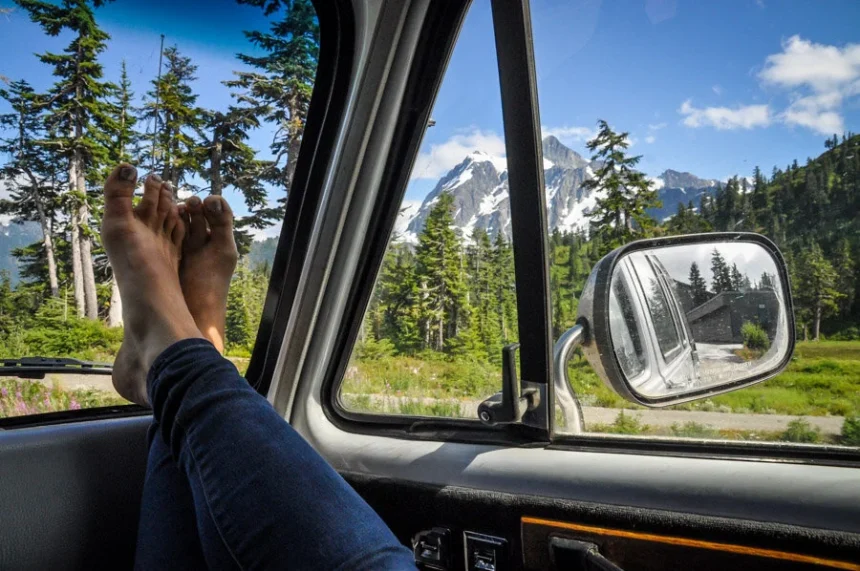
Gas prices are climbing. Flight cancellations piling up. Hotel rates in popular destinations are hitting record highs. If travel feels harder and more expensive than it used to be, you’re not imagining things. But here’s the twist: more people are traveling than ever before, just not the way they used to. The open road is calling, and Americans are answering in record numbers.
- Why Road Trips Are Having a Major Moment
- How to Plan a Road Trip That Doesn’t Break the Bank
- Map Out Your Route (But Stay Flexible)
- Budget by Category, Not Just Total Cost
- Pack Smart to Avoid Extra Costs
- Don’t Skip Travel Insurance
- Top Road Trip Routes Worth Your Time
- The Pacific Coast Highway (California)
- Route 66 (Chicago to Santa Monica)
- The Blue Ridge Parkway (Virginia to North Carolina)
- The Great River Road (Minnesota to the Gulf)
- The Utah Mighty Five
- Safety Tips Every Road Tripper Should Know
- The Open Road Is Calling
Road trips have gone from a nostalgic summer activity to a full-blown travel revolution. Families are loading up the SUV instead of boarding a plane. Couples are mapping out multi-state loops instead of booking international getaways. Solo travelers are embracing the freedom of the highway like never before. The reasons are simple: road trips are budget-friendly, flexible, and let you feel in control of your own adventure.
But it’s not just about saving money. There’s a deeper shift happening. People want to explore their own backyard. They want to skip the stress of crowded airports, surprise fees, and cramped middle seats. They want to stop whenever a roadside diner looks interesting or a scenic overlook catches their eye. And honestly? That sounds pretty good right now.
Why Road Trips Are Having a Major Moment
The Budget Factor Is Real
Let’s talk numbers. A family of four flying from Chicago to Los Angeles can easily spend $2,000 to $3,000 just on airfare, before factoring in baggage fees, rental cars, and airport transportation. That same family can drive the same route for a fraction of the cost, especially if they’re already in a fuel-efficient vehicle.
Even with today’s gas prices, the math usually works out in favor of driving. The average cost of gas for a 2,000-mile road trip in a car that gets 30 miles per gallon runs around $250 to $350, depending on where you’re driving. Compare that to four plane tickets, and you’re saving potentially thousands of dollars. That money can go toward better hotels, amazing meals, or activities you’ll actually remember.
Hotels along major road trip routes have also gotten more competitive. Chains are offering rewards programs, free breakfasts, and flexible cancellation policies. Vacation rentals in smaller towns are often surprisingly affordable. And if you’re willing to camp or sleep in your vehicle, your accommodation costs can drop to almost nothing.
Safety and Control Are Huge
After a few years of pandemic-era uncertainty, travelers are prioritizing control over their environment. When you drive, you set the schedule. You choose who you interact with. You control ventilation, cleanliness, and proximity to others. For families with young kids, elderly parents, or anyone with health concerns, that peace of mind is worth a lot.
You’re also avoiding some of the most common travel headaches. No security lines. No flight delays. No gate changes announced five minutes before boarding. No lost luggage roulette. If something goes wrong, you can simply pull over, adjust, and keep moving.
Driving also gives you access to small towns, national parks, and roadside attractions that simply aren’t reachable by plane. Want to see the world’s largest ball of twine? You need a car for that. Want to hike a less-visited trail in a state park nobody’s heard of? Same deal. Road trips open up a side of travel that flying just can’t touch.
The Bucket-List Effect
National parks have been experiencing record visitation for several years running, and a lot of that traffic is coming from road trippers. Places like Zion, Yellowstone, Acadia, and the Grand Canyon are seeing visitor numbers that would have seemed impossible a decade ago. The good news? Most of the U.S. has 63 national parks and hundreds of state parks waiting to be explored, many of which still feel wild and uncrowded.
The Great American Road Trip is having a cultural moment too. Social media is full of people documenting their journeys, sharing hidden gems, and inspiring others to hit the road. There’s something deeply satisfying about watching someone discover a beautiful waterfall in Appalachia or a quiet beach along the Oregon Coast, places you can actually visit yourself without selling a kidney to fund the trip.
How to Plan a Road Trip That Doesn’t Break the Bank
Map Out Your Route (But Stay Flexible)
Start by identifying your must-see stops. Are you chasing national parks? Specific cities? A particular food scene? Once you have your anchors, build a rough route between them. Use apps like Google Maps, Roadtrippers, or Waze to find the most efficient path, but also keep room for spontaneous detours.
A good rule of thumb is to drive no more than 6 to 8 hours per day. Anything longer and you start to dread the drive itself. Breaking the trip into manageable chunks keeps everyone in better spirits and leaves time for the unexpected.
Budget by Category, Not Just Total Cost
Instead of picking a random number and hoping it works, break your budget into clear categories:
- Fuel: Estimate based on your vehicle’s MPG and current gas prices along your route.
- Lodging: Decide how many nights you’ll stay in hotels versus camping or crashing with friends.
- Food: Plan a mix of grocery store meals and restaurant splurges to keep costs down.
- Activities: Research entrance fees, tours, and rentals in advance so there are no surprises.
- Emergency fund: Set aside 10-15% of your total budget for unexpected expenses.
Knowing where your money is going makes it way easier to stay on track.
Pack Smart to Avoid Extra Costs
One of the sneaky budget killers on road trips is buying things you forgot. Sunscreen, phone chargers, snacks, water bottles, and basic first aid supplies. Pack these before you leave, and you’ll save a fortune on overpriced gas station versions.
Also consider a small cooler for drinks and snacks. Stopping at a grocery store every couple of days instead of buying food at every rest stop adds up to serious savings over a long trip.
Don’t Skip Travel Insurance
Even on a domestic trip, things can go sideways. A flat tire in the middle of nowhere. A sudden illness. A hotel that turns out to be a disaster. Travel insurance isn’t just for international trips. A basic domestic policy is usually affordable and can save you thousands if something unexpected happens.
Top Road Trip Routes Worth Your Time
The Pacific Coast Highway (California)
This is the stuff road trip dreams are made of. Hugging the California coastline from San Francisco to San Diego (or vice versa), the PCH delivers jaw-dropping ocean views, charming beach towns, and stops like Big Sur, Monterey, and Malibu. Give yourself at least 5 to 7 days to do it justice.
Route 66 (Chicago to Santa Monica)
The Mother Road. This historic highway stretches roughly 2,400 miles across eight states and offers a nostalgic dive into classic Americana. Quirky roadside attractions, vintage diners, and that famous open feeling that defined a generation of travel.
The Blue Ridge Parkway (Virginia to North Carolina)
If mountains are more your speed, the Blue Ridge Parkway delivers 469 miles of scenic beauty. Lush forests, misty peaks, and charming small towns with local craft shops and farm-to-table restaurants. Fall foliage here is legendary, but spring and summer are equally stunning.
The Great River Road (Minnesota to the Gulf)
Following the Mississippi River from its headwaters in Minnesota down to Louisiana, this route is a deep dive into American history, music, and culture. Blues joints, Civil War sites, beautiful river towns, and some of the best barbecue you’ll ever eat.
The Utah Mighty Five
If national parks are your thing, Utah’s “Mighty Five” (Arches, Bryce Canyon, Canyonlands, Capitol Reef, and Zion) can be linked into one unforgettable road trip. The red rock landscapes here look like another planet, and the drive between parks is half the fun.
Safety Tips Every Road Tripper Should Know
Get your car checked before you go. Oil change, tire pressure, brakes, and fluid levels. A little preventive maintenance can save you from a major headache on the road.
Keep an emergency kit in the car. Jumper cables, a spare tire (and the knowledge to change it), a flashlight, basic tools, water, and non-perishable snacks.
Watch the weather. Mountain weather can change fast. Desert temperatures can be brutal. A quick check of the forecast each morning helps you plan your day.
Stay alert and rested. Drowsy driving is just as dangerous as distracted driving. Switch drivers if you’re traveling with someone, and pull over if you need a break. No destination is worth a crash.
Share your itinerary. Let someone back home know your route and check in regularly. Cell service can be spotty in remote areas, so plan for that.
Trust your gut. If a situation feels off, a neighborhood feels unsafe, or a rest stop seems sketchy, keep driving. Your instincts are usually right.
The Open Road Is Calling
Road trips aren’t just a budget hack. They’re a return to something simpler, more intentional, and more fun. You see more. You connect more. You learn more about the country you live in and the people who call it home. The freedom of the open road is one of the most underrated experiences in modern life, and right now, it’s more accessible than it’s been in years.
Whether you’re planning a quick weekend getaway or a full-blown cross-country adventure, there’s never been a better time to load up the car and go. The destinations are waiting. The savings are real. And the memories you’ll make? Those last forever.