

Think about your last trip to the airport. You probably woke up at dawn, endured a frantic rideshare through gridlock traffic, and waited in a snake-like security line while juggling your shoes, laptop, and boarding pass. After paying eighteen dollars for a lukewarm coffee and a dry muffin, you crammed into a seat built for someone half your size, praying your checked luggage would actually arrive at the baggage carousel.
- The Flight Nightmare vs. The Train Experience
- The Green Revolution: Slashing Your Carbon Footprint
- The Golden Age of Sleeper Trains Is Back
- High-Speed Rail Is Shrinking Continents
- Europe’s Intercity Speedways
- Asia’s High-Tech Super-Networks
- North America’s Emerging Track Renaissance
- How to Plan and Book Your First Train Adventure
- 1. Know Where to Look for Tickets
- 2. Book Early for the Best Fares
- 3. Consider a Rail Pass for Flexibility
- Pack Your Bags (Without Weighing Them)
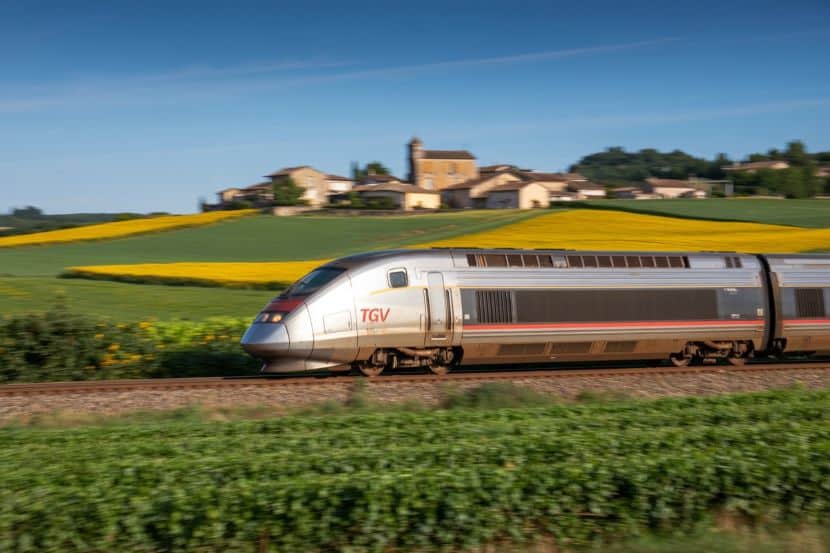
It is exhausting just replaying the scene. That is why a massive shift is sweeping the way we explore the world. Across Europe, Asia, and even North America, rail travel is enjoying a dazzling renaissance. Travelers are fed up with the stress, hidden fees, and chaos of modern aviation, choosing instead to swap flights for trains whenever they can.
Whether you want to reduce your carbon footprint, maximize your vacation time, or simply bring back the lost romance of the journey, riding the rails offers a refreshing alternative to the airport scramble. Here is why the tracks are winning travelers back. and how you can make your next getaway smoother, greener, and far more scenic.
The Quick Version
- Zero airport stress: Trains take you directly from downtown to downtown with generous legroom, no invasive security lines, and no baggage fees.
- Massive eco-perks: High-speed electric trains slash carbon emissions by up to 80% to 90% compared to equivalent regional flights.
- The return of sleepers: Luxurious and budget-friendly night trains are turning travel time into a restful night of sleep, saving you hotel costs.
- True time savings: Door-to-door, journeys under four hours on high-speed rail consistently beat flying when you factor in airport transit.
The Flight Nightmare vs. The Train Experience
When you compare flying to taking the train, looking only at the time in the air is deceiving. A flight from London to Paris might claim to take just one hour and twenty minutes. But add the hour-long trip to Heathrow, the two-hour security buffer, the taxi time on the runway, and the trek from Charles de Gaulle into central Paris, and your quick flight suddenly swallows five to six hours of your day.
Train travel completely flips this script. You walk into a train station in the very heart of the city fifteen to thirty minutes before departure. You step aboard, slide your bags onto an overhead rack with zero weight limits, and sink into a spacious seat with actual legroom.
There are no middle seats on most modern rail cars. You have immediate access to power outlets, reliable Wi-Fi, and the freedom to get up and stretch your legs whenever you like. Instead of staring at gray cloud cover or your neighbor’s elbow, you watch rolling vineyards, dramatic mountain ranges, and historic villages drift past panoramic windows.
The Green Revolution: Slashing Your Carbon Footprint
We all want to explore new places, but many of us feel uneasy about the environmental cost of frequent flying. Commercial aviation accounts for roughly 2.5% of global carbon dioxide emissions, and high-altitude emissions have a uniquely potent warming effect on the atmosphere.
This awareness sparked the European flygskam (“flight shame”) movement, which has since matured into a positive, proactive celebration of green travel: tagskryt (“train bragging”).
Choosing rail travel over a short-haul flight is one of the single most impactful decisions you can make as an eco-conscious traveler:
- Massive emission cuts: Electric high-speed trains produce between 80% and 90% fewer greenhouse gas emissions per passenger kilometer compared to regional commercial jets.
- Clean energy integration: Many rail networks in countries like Germany, Switzerland, and Sweden run on 100% renewable electricity sourced from wind, solar, and hydropower.
- Policy changes supporting rail: Countries like France have banned short-haul domestic flights on routes where a direct train trip takes under two-and-a-half hours.
You do not have to give up your love for adventure to protect the places you cherish. You just need to change the vehicle that carries you there.
The Golden Age of Sleeper Trains Is Back
For decades, sleeper trains were slowly phased out, replaced by budget airlines that promised rock-bottom fares at the expense of human dignity. Today, night trains are making one of the most exciting comebacks in transportation history.
Austria’s national rail operator, ÖBB, led the charge with its popular Nightjet network, connecting major European cultural capitals like Vienna, Berlin, Rome, Amsterdam, and Zurich with sleek, ultra-modern rolling stock. New startups like European Sleeper and Midnight Trains are rapidly expanding routes across the continent.
Why Night Trains Make Total Sense
- Save on accommodations: A sleeper ticket acts as both your transportation and your hotel room for the night, balancing out your travel budget.
- Gain an entire day of sightseeing: Instead of spending a sunny afternoon navigating terminals, you fall asleep in one country and wake up refreshed in another.
- Modern comfort upgrades: New generation sleeper cars feature private sleeper cabins with en-suite showers, wireless charging pads, keycard access, and complimentary breakfast delivered right to your bunk.
High-Speed Rail Is Shrinking Continents
It is not just romantic overnight routes leading to this revival. High-speed rail corridors have gotten so fast and efficient that flying between major cities no longer makes mathematical sense.
Europe’s Intercity Speedways
In Spain, high-speed rail competition between Renfe, Ouigo, and Iryo has sent ticket prices tumbling while driving service quality up. The 390-mile journey between Madrid and Barcelona takes as little as two-and-a-half hours on the bullet train. The rail network captured over 80% of the passenger share on that route, rendering air shuttles virtually obsolete.
Asia’s High-Tech Super-Networks
Japan’s world-famous Shinkansen (Bullet Train) remains the global standard for safety, punctuality, and frequency, operating with an average delay measured in mere seconds. Meanwhile, China has built over 28,000 miles of dedicated high-speed tracks over the past two decades, linking distant provinces at speeds exceeding 200 mph.
North America’s Emerging Track Renaissance
While the United States has historically lagged behind in passenger rail infrastructure, the tide is beginning to turn:
- Brightline in Florida: America’s first private passenger rail line in a century connects Miami to Orlando at speeds up to 125 mph, saving motorists from the gridlock of Interstate 4.
- Amtrak’s Next-Gen Acela: High-speed train sets are rolling onto the bustling Northeast Corridor between Boston, New York City, and Washington, D.C.
- Brightline West: Construction is moving forward on a high-speed line linking Las Vegas to Southern California, aiming to cut driving times in half.
How to Plan and Book Your First Train Adventure
If you are accustomed to booking flights on aggregator sites, organizing an extended rail journey might feel unfamiliar at first. Fortunately, modern digital tools have made booking tracks easier than ever.
1. Know Where to Look for Tickets
Avoid booking through third-party resellers that mark up fees. Instead, use these trusted platforms:
- The Man in Seat 61: The undisputed gold standard of train travel websites. This legendary site provides step-by-step guides, photos of train interiors, and booking advice for virtually every country on Earth.
- Trainline and Omio: Handy aggregators that compare schedules across different national operators in Europe, making multi-leg cross-border trips easy to visualize.
- National Rail Apps: For the absolute lowest prices, book directly on official operator apps like SNCF Connect (France), Deutsche Bahn (Germany), Renfe (Spain), or Trenitalia (Italy).
2. Book Early for the Best Fares
Just like airlines, modern high-speed trains use dynamic pricing. Tickets usually open for reservation 60 to 90 days in advance (and sometimes up to 180 days for seasonal routes). Snagging a ticket the day it drops can save you upwards of 70% compared to buying at the station counter on the day of departure.
3. Consider a Rail Pass for Flexibility
If you plan on bouncing between multiple regions over a few weeks, a Eurail Pass (for non-European residents) or Interrail Pass (for European residents) offers incredible freedom. You can board hundreds of regional trains simply by activating your digital pass on your smartphone. Just keep in mind that premier high-speed and night trains still require a small supplemental seat reservation fee.
Pack Your Bags (Without Weighing Them)
One of the greatest joys of stepping onto a train platform is the sheer lack of baggage anxiety. You do not need to worry about the three-ounce liquid rule, you do not need to pry your toiletry kit into a clear plastic bag, and nobody will force you to squeeze your weekender bag into an impossible metal sizing crate.
Bring your favorite water bottle, pack real snacks, and bring along that paperback novel you have been meaning to finish. Rail travel restores something that air travel stripped away long ago: the pleasure of the transit itself.
Next time you map out a vacation, skip the boarding passes, bypass the airport security lines, and trade your cramped middle seat for a panoramic window view. Book the ticket, step onto the platform, and let the gentle rhythm of the tracks remind you that getting there is half the fun.