

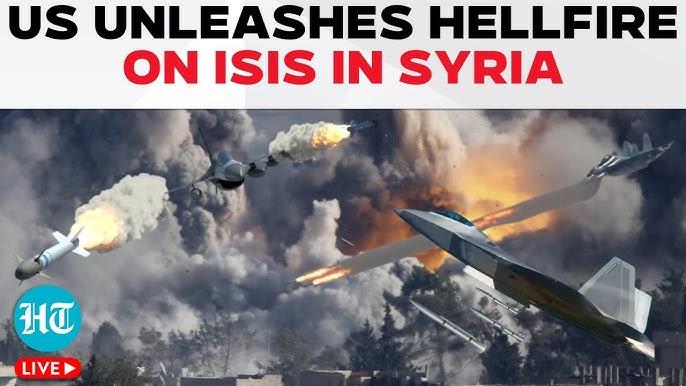
Breaking: US launches massive Operation Hawkeye Strike hitting 70+ ISIS targets in Syria after 3 Americans killed. Full details, casualties, and implications now.
“In the face of evil, silence is complicity.” – General James Mattis
As a defense analyst who has covered Middle East operations for over 15 years, I can tell you that December 19, 2025 marks one of the most significant U.S. military responses to ISIS since the territorial defeat of the so-called caliphate in 2019. In what Defense Secretary Pete Hegseth called “a declaration of vengeance,” American forces launched Operation Hawkeye Strike, a massive coordinated assault striking more than 70 ISIS targets across central Syria using over 100 precision munitions.
This operation represents far more than routine counter-terrorism. It signals a fundamental shift in how the Trump administration approaches threats to American forces overseas, demonstrating that attacks on U.S. personnel will be met with overwhelming, immediate retaliation rather than measured, incremental responses. For anyone tracking Middle East security dynamics, understanding this operation’s scope, execution, and strategic implications is essential for comprehending the evolving landscape of counter-terrorism operations in 2026.
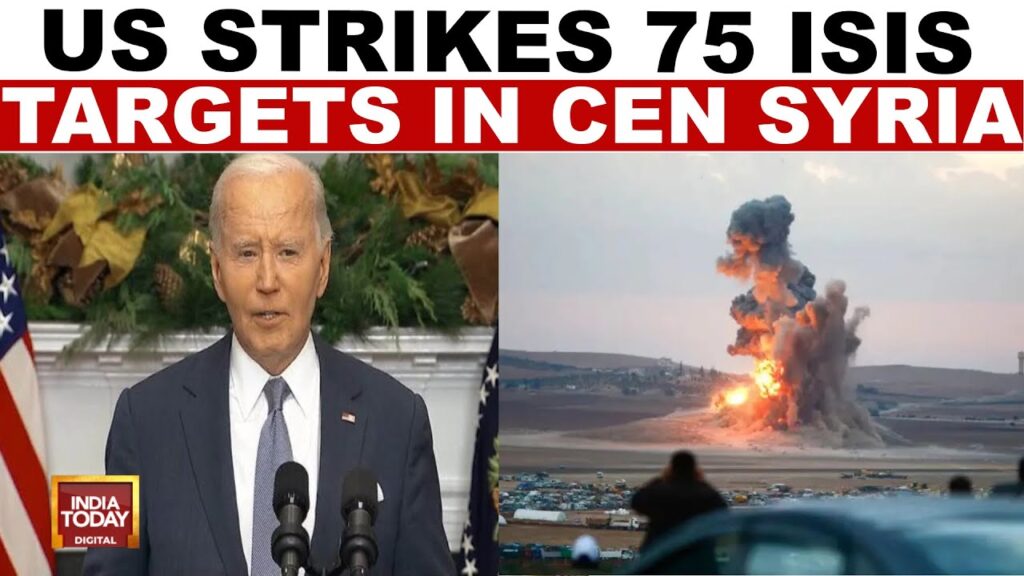
The Tragedy That Sparked Operation Hawkeye
Understanding the military operation requires first understanding the attack that provoked it, a devastating ambush that killed three Americans and wounded three more in the deadliest assault on U.S. forces in Syria since 2019.
The Palmyra Ambush: December 13, 2025
On Saturday, December 13, 2025, Sgt. William “Nate” Howard, 29, of Marshalltown, Iowa, and Sgt. Edgar Torres Tovar, 25, of Des Moines, Iowa, along with their civilian interpreter Ayad Mansoor Sakat, were killed in an ambush by a lone ISIS gunman while conducting a key leader engagement in Palmyra, Syria.
Both sergeants were assigned to the Iowa National Guard’s 1st Squadron, 113th Cavalry Regiment, 2nd Infantry Brigade Combat Team, 34th Infantry Division. They were part of roughly 1,800 Iowa National Guard soldiers deployed to the Middle East earlier this year as part of Operation Inherent Resolve, the ongoing coalition mission to prevent ISIS resurgence.
Three additional Iowa National Guard members were wounded in the attack and evacuated for further medical treatment. The ambush occurred near At Tanf Garrison, a remote U.S. outpost located on Syria’s border with Jordan where between 100 to 150 American troops are currently based.
The Dover Transfer: A Nation Mourns
On December 17, 2025, President Trump and Defense Secretary Hegseth attended the dignified transfer ceremony at Dover Air Force Base in Delaware, receiving the remains of the fallen Americans. The ceremony underscored the personal cost of America’s continuing presence in Syria and set the stage for the military response that would follow two days later.
In his remarks, Trump vowed “very serious retaliation” in a Truth Social post, stating that all terrorists who attack Americans are “hereby warned” they “will be hit harder than you have ever been hit before.” This wasn’t empty rhetoric; it was a promise that would be fulfilled within 48 hours.
The Intelligence Gap and Attribution Questions
Interestingly, the attack’s attribution remains somewhat ambiguous. While the Trump administration vowed retaliation against ISIS, Syria’s Ministry of Interior Affairs said the attacker had been a part of Syria’s Internal Security service, and ISIS has not claimed responsibility for the attack.
A CENTCOM review is ongoing regarding the exact ties of the gunman, who had joined the Syrian Security Forces two months before the attack and was in the process of being removed for suspicious activity. This ambiguity didn’t delay American retaliation but does raise questions about the evolving nature of ISIS operations in post-civil-war Syria.
Operation Hawkeye Strike: Anatomy of the Response
The military response to the Palmyra ambush was swift, massive, and methodically planned, involving intelligence gathered from operations conducted immediately after the initial attack.
The Operational Planning Phase
After the December 13 attack, U.S. and partner forces conducted 10 operations resulting in the death or detention of around 23 people, which also yielded intelligence from electronics gathered during the operations that provided information contributing to targeting for the strikes.
This rapid intelligence exploitation demonstrates the modern counter-terrorism cycle: attack leads to immediate raids, raids generate intelligence about broader networks, intelligence informs precision strikes against infrastructure and leadership. The compressed timeline from ambush to major strike operation, just six days, reflects both political will for swift retaliation and effective intelligence processing.
Adm. Brad Cooper, commander of U.S. Central Command, visited At Tanf Garrison on Friday, December 19, hours before the strikes commenced. He recognized troops there for their actions under fire during the December 13 ambush and discussed the impending operation, demonstrating senior leadership engagement at the tactical level.
The Strike Package: Overwhelming Force
Friday’s large-scale retaliatory strikes involved F-15 and A-10 fighter jets, attack helicopters and the use of HIMARS rocket artillery, striking 70 targets, including ISIS weapon areas and infrastructure in central Syria.
American military forces employed more than 100 precision munitions during the operation, hitting suspected ISIS sites at several locations across Palmyra and broader central Syria. The strike package represented a combined arms approach:
F-15 Strike Eagles provided high-altitude precision strike capability, delivering GPS-guided munitions against fortified positions and infrastructure targets.
A-10 Thunderbolt II ground-attack aircraft, known as “Warthogs,” engaged targets requiring close air support precision, particularly in areas where collateral damage concerns were paramount.
Attack Helicopters likely AH-64 Apaches, provided armed reconnaissance and strike capability against mobile targets and personnel concentrations.
HIMARS Rocket Artillery High Mobility Artillery Rocket Systems fired GPS-guided rockets from ground positions, providing standoff precision strike capability without aircraft exposure to air defenses.
Partner nations, including Jordan, joined the U.S. in the strikes, demonstrating regional cooperation in counter-ISIS operations. This coalition aspect is significant because it signals that ISIS resurgence concerns extend beyond American interests to regional stability more broadly.
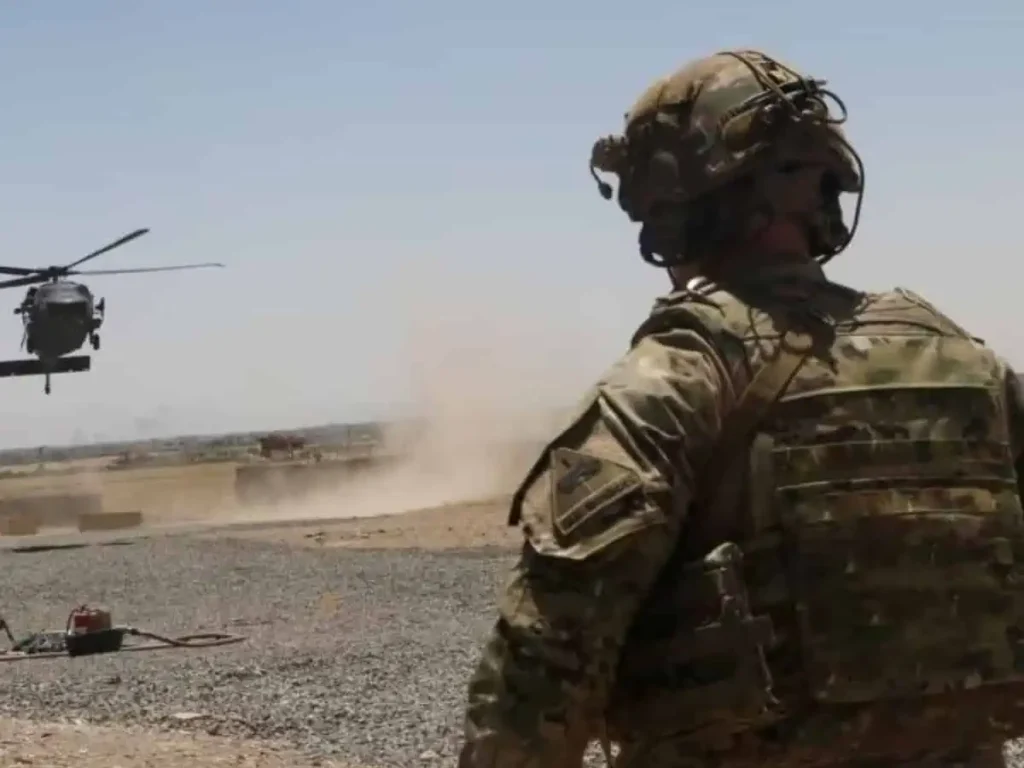
The Targets: Dismantling ISIS Infrastructure
The operation aimed to eliminate ISIS fighters, infrastructure, and weapons sites in direct response to the attack on U.S. forces. The 70+ targets struck included:
Weapons Storage Sites containing munitions, explosives, and equipment that ISIS militants use for attacks.
Training Facilities where ISIS fighters prepare for operations against U.S., coalition, and Syrian forces.
Command and Control Nodes communications infrastructure and leadership locations that coordinate ISIS activities.
Logistics Hubs facilities supporting ISIS operations including vehicle staging areas and supply depots.
Fighter Concentrations locations where intelligence indicated significant ISIS personnel were gathered.
The goal, according to U.S. officials, was to deliver a significant blow to ISIS remnant forces in Syria, degrade their infrastructure, and eliminate weapons stockpiles that support attacks on American and partner forces.
The Strategic Message: Vengeance, Not War
Defense Secretary Hegseth’s characterization of Operation Hawkeye Strike as “a declaration of vengeance” rather than “the beginning of a war” deserves careful analysis because it signals important policy distinctions.
Distinguishing Retaliation from Escalation
“This is not the beginning of a war; it is a declaration of vengeance,” Hegseth wrote on X. “The United States of America, under President Trump’s leadership, will never hesitate and never relent to defend our people.”
This framing is deliberate. The administration wants to make clear that Operation Hawkeye represents punitive retaliation for a specific attack rather than expansion of U.S. military commitment in Syria. This distinction matters for several reasons:
Domestic Politics: The Trump administration campaigned on ending “endless wars” and reducing U.S. military presence abroad. Framing this as targeted vengeance rather than war expansion aligns with that messaging.
International Law: Characterizing the operation as defensive retaliation in response to an attack on U.S. forces provides clearer legal justification than offensive operations might require.
Regional Dynamics: Limiting the operation’s scope to ISIS targets avoids entanglement in Syria’s complex civil war dynamics or tensions with other actors in the region.
Strategic Restraint: The message warns potential attackers of consequences while signaling that America isn’t seeking broader conflict escalation in the Middle East.
The Iowa Connection: Operation Hawkeye’s Symbolic Name
The operation’s name, “Hawkeye Strike,” references Iowa’s state nickname “the Hawkeye State,” honoring the two Iowa National Guard soldiers killed in the Palmyra ambush. This naming convention personalizes the military response and connects the operation directly to the fallen Americans it aims to avenge.
Military operations are often named systematically with little emotional resonance. Operation Hawkeye’s explicit connection to the victims represents a departure from that tradition, signaling that this response is personal, not routine.
The ISIS Remnant: Understanding the Persistent Threat
To understand why American forces remain in Syria and why ISIS attacks continue despite the caliphate’s territorial defeat in 2019, it’s essential to grasp the current state of the organization.
ISIS Current Strength and Capabilities
According to the latest U.S. intelligence estimate, there are still between 1,500 to 3,000 ISIS militants still operating in Syria and Iraq. These aren’t just scattered individuals but organized cells maintaining infrastructure, conducting attacks, and attempting to rebuild capacity.
ISIS operates through several models in 2025:
Sleeper Cells in urban areas that conduct assassinations, bombings, and targeted attacks against security forces and civilians.
Desert Redoubts in remote areas of eastern Syria and western Iraq where ISIS maintains training camps and supply caches away from government control.
Prison Networks ISIS fighters detained in facilities across Syria and Iraq maintain connections and in some cases have orchestrated breakout attempts.
Ideological Recruitment despite territorial losses, ISIS propaganda continues attracting adherents through online radicalization.
The organization no longer holds territory in the traditional sense but functions as an insurgency capable of conducting attacks, ambushes, and suicide operations. The December 13 Palmyra attack demonstrates this enduring capability.
The Mission Continues: Why 1,000 U.S. Troops Remain
There are currently 1,000 U.S. troops in Syria, the bulk of them located in eastern Syria, with the continuing mission to prevent a resurgence of ISIS which was defeated militarily in 2019.
These forces conduct several critical functions:
Partner Force Training working with Syrian Democratic Forces and other local partners to maintain counter-ISIS pressure.
Intelligence Collection monitoring ISIS activities, identifying emerging threats, and tracking foreign fighters.
Rapid Response Capability conducting raids against high-value targets when intelligence emerges.
Deterrence preventing ISIS from regaining territorial control through persistent military presence.
Border Security working with Jordan and Iraq to prevent cross-border ISIS movement and smuggling.
The Palmyra attack demonstrates why this mission continues. ISIS remains capable of sophisticated ambush operations that kill American personnel, validating concerns that complete U.S. withdrawal could enable ISIS resurgence.
The Syrian Government Angle: An Unexpected Partnership
One of the most surprising aspects of Operation Hawkeye Strike is the cooperation between U.S. forces and Syria’s new government under President Ahmad al-Sharaa, marking a dramatic shift in U.S.-Syrian relations.
From Civil War to Counter-Terrorism Cooperation
Syria’s civil war, which began in 2011, positioned the United States and the Assad regime as adversaries with American forces supporting opposition groups and conducting operations without Damascus’s approval. The fall of Assad and rise of the new Syrian government under al-Sharaa has created space for pragmatic counter-terrorism cooperation.
President Trump stated that the Syrian government “is fully in support” of Operation Hawkeye Strike, describing al-Sharaa as “a man who is working very hard to bring Greatness back to Syria.” This represents a remarkable normalization of relations just months after Syria’s government transition.
The cooperation extends beyond rhetorical support. After the December 13 attack, the Syrian government helped carry out 10 operations in Syria and Iraq resulting in the deaths or detention of 23 terrorist operatives, with U.S. forces providing support during those raids.
The Strategic Logic of U.S.-Syrian Cooperation
This partnership makes strategic sense for both parties:
For the United States: Working with Syrian government forces provides local intelligence, ground access, and legitimacy for operations that Damascus could otherwise characterize as violations of Syrian sovereignty.
For Syria: Cooperating with America on counter-terrorism provides international legitimacy, potential sanctions relief, and reconstruction assistance while addressing the genuine ISIS threat to Syrian stability.
Shared Enemy: Both nations face ISIS as a common threat. Unlike other Syrian dynamics where U.S. and Syrian interests diverge, on ISIS they align clearly.
However, serious questions remain about this partnership’s sustainability and appropriateness. Al-Sharaa’s coalition includes groups with previous ties to al-Qaeda, raising legitimate concerns about whether cooperation against ISIS might inadvertently strengthen other extremist elements.
Regional and International Reactions
Operation Hawkeye Strike’s scope and the U.S.-Syrian cooperation dimension have generated varied international responses reflecting the complex geopolitics surrounding Syria.
Middle Eastern Perspectives
Jordan actively participated in the strikes, reflecting shared concerns about ISIS operating along its border and potentially destabilizing the kingdom.
Iraq has coordinated with U.S. forces on cross-border operations against ISIS, though Baghdad’s political sensitivity about American military presence creates ongoing tensions.
Turkey has complex interests in Syria including concerns about Kurdish forces that partner with America, creating friction even when fighting a common ISIS enemy.
Israel generally supports American operations degrading ISIS and Iranian-backed forces in Syria, though Operation Hawkeye’s specific targets were not near Israeli concerns.
Gulf States particularly Saudi Arabia and the UAE, view ISIS as an existential threat and generally support American counter-terrorism operations in the region.
European and NATO Responses
European nations face ISIS threats including returning foreign fighters and inspired attacks in their capitals. They generally support American operations that degrade ISIS capabilities, though some express concerns about insufficient coordination or consultation before major strikes.
France, Germany, and the United Kingdom maintain their own forces in Iraq and have conducted operations in Syria, making them coalition partners with stakes in ISIS defeat. Operation Hawkeye coordinates with broader coalition efforts even if executed unilaterally.
Russian and Iranian Positions
Russia and Iran, both Assad regime backers during Syria’s civil war, maintain military presence in Syria and view American operations with suspicion even when targeting mutual ISIS enemies.
Moscow characterizes ongoing U.S. presence in Syria as illegal occupation and calls for complete withdrawal. However, Russia also fights ISIS and recognizes the threat, creating complicated dynamics where tactical interests sometimes align despite strategic competition.
Iran backs various militia groups in Syria and opposes American presence, though these forces also combat ISIS. The intersection of counter-terrorism and great power competition creates situations where multiple actors target ISIS while remaining adversaries on other issues.
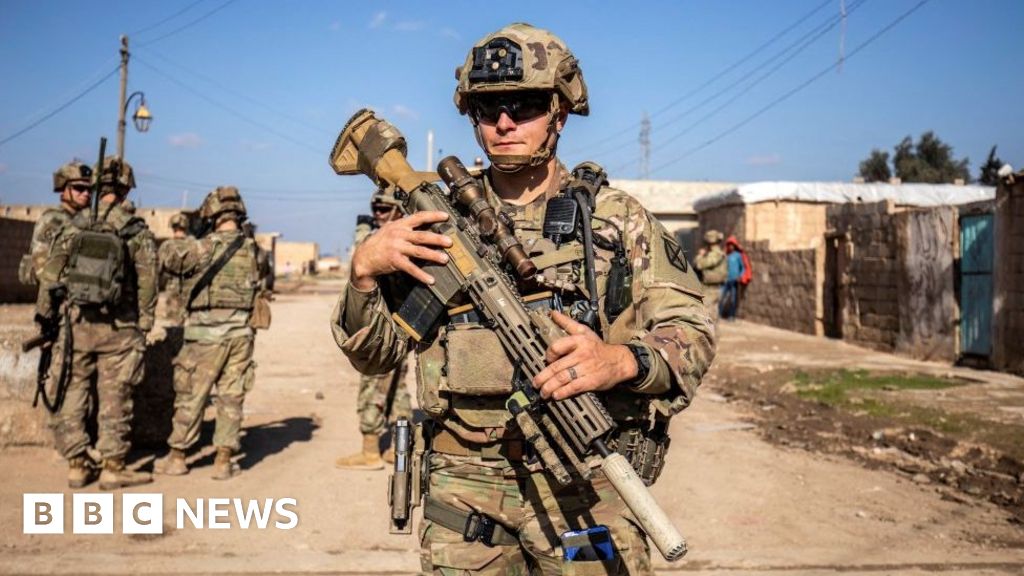
The Broader Strategic Context: Counter-Terrorism in 2026
Operation Hawkeye Strike doesn’t occur in isolation but reflects broader trends in counter-terrorism strategy as America adapts to evolving threats two decades after 9/11.
The Evolution from Occupation to Over-the-Horizon Operations
The U.S. approach to counter-terrorism has shifted dramatically from the massive troop deployments and nation-building projects of the Iraq and Afghanistan wars to smaller footprints focused on enabling local partners and conducting precision strikes.
The 1,000 U.S. troops in Syria represent this model: enough presence to maintain situational awareness, train partners, and conduct operations, but far fewer than the 170,000 deployed to Iraq at peak or 100,000 in Afghanistan.
This approach offers advantages including lower costs, reduced American casualties, and decreased political controversy about “endless wars.” However, it also creates vulnerabilities demonstrated by the Palmyra ambush where small American contingents operate in hostile environments with limited support.
The ISIS 2.0 Challenge
ISIS in 2025 operates differently than the organization that seized vast territories in 2014-2015. While militarily defeated as a conventional force holding ground, ISIS has adapted to function as an insurgency and terrorist network.
This evolution creates persistent challenges:
Decentralized Operations: Without central territory to defend, ISIS cells operate independently, making them harder to track and target systematically.
Prison Populations: Tens of thousands of ISIS fighters and their families remain detained in camps across Syria and Iraq, creating radicalization incubators and potential breakout scenarios.
Online Propaganda: Despite losing physical territory, ISIS maintains robust online presence continuing to inspire attacks worldwide.
Financing Networks: ISIS financing continues through taxation, smuggling, and external support, providing resources for operations despite territorial losses.
Opportunistic Expansion: ISIS seeks to exploit instability anywhere it emerges, making failed states and conflict zones attractive for resurgence.
Operation Hawkeye strikes at ISIS physical infrastructure and personnel, but degrading a decentralized insurgency requires sustained pressure over years, not single decisive operations.
The Political Debate Over Syria Presence
American troop presence in Syria remains politically contentious with valid arguments on multiple sides:
Arguments for Continued Presence:
The December 13 Palmyra ambush demonstrates ISIS remains capable of killing Americans, validating concerns about resurgence if pressure is released.
Withdrawal could create vacuum allowing ISIS territorial resurgence similar to what occurred in Iraq after 2011 U.S. withdrawal, requiring subsequent reintervention at greater cost.
Continued presence provides leverage over Syrian political outcomes and counters Russian and Iranian influence in the region.
American forces protect Kurdish partners who bore the brunt of ground fighting against ISIS and now face threats from Turkey and Syrian government forces.
Arguments Against Continued Presence:
No clear end state or victory condition means potential indefinite commitment with recurring casualties like those in Palmyra.
ISIS no longer poses the existential territorial threat justifying initial intervention; current operations could be conducted remotely without permanent bases.
American presence lacks clear congressional authorization under current law, creating constitutional questions about ongoing operations.
Broader Middle East entanglements distract from great power competition with China that should be the military’s primary focus.
Regional actors have greater stake in ISIS defeat than America and should bear primary responsibility for counter-terrorism operations.
Operation Hawkeye Strike will intensify this debate, with proponents arguing it demonstrates why American presence remains necessary and critics countering it shows the inevitable costs of indefinite commitment.
Tactical Analysis: What Operation Hawkeye Accomplished
Beyond the strategic messaging and political debates, assessing the operation’s military effectiveness requires examining what was accomplished and what challenges remain.
Immediate Tactical Gains
The strikes delivered significant damage to ISIS infrastructure:
Weapons Depots Destroyed: Eliminating stockpiles ISIS needs for attacks reduces operational capability for months as weapons must be replaced.
Personnel Casualties: While precise casualty figures aren’t publicly confirmed, striking 70+ targets with 100+ precision munitions likely killed dozens of ISIS fighters and destroyed equipment.
Intelligence Gains: Post-strike battle damage assessment provides intelligence about ISIS locations, priorities, and defensive postures that inform future operations.
Morale Impact: Demonstrating swift overwhelming retaliation after attacks on Americans sends psychological messages to both ISIS fighters and U.S. personnel about consequences and support.
Infrastructure Degradation: Destroying training camps, command nodes, and logistics hubs forces ISIS to rebuild capacity, absorbing resources and attention.
The Limitations of Airpower
However, air strikes alone face inherent limitations in counter-insurgency:
Dispersed Targets: ISIS doesn’t mass forces or hold territory, making them difficult to target from the air without ground intelligence.
Civilian Considerations: Striking targets in populated areas risks civilian casualties that generate backlash and ISIS propaganda.
Temporary Effects: Infrastructure can be rebuilt, personnel replaced, and operations resume unless ground forces maintain pressure.
Intelligence Dependency: Effective strikes require precise intelligence that rapidly becomes outdated as ISIS adapts.
Strategic Ambiguity: Without holding territory, “defeating” ISIS lacks clear metrics making campaign success difficult to measure.
Operation Hawkeye degraded ISIS capabilities meaningfully but won’t eliminate the organization. Sustained pressure through continued operations, partner force actions, and intelligence collection remains necessary.
Looking Forward: Implications for 2026 and Beyond
Operation Hawkeye Strike’s repercussions will shape counter-terrorism operations, U.S. Middle East policy, and ISIS strategy throughout 2026 and beyond.
ISIS Likely Responses
ISIS will likely adapt in several ways:
Operational Security: The strikes demonstrate consequences of maintaining fixed infrastructure, likely pushing ISIS toward more mobile, dispersed operations harder to target.
Retaliatory Attacks: ISIS may attempt revenge attacks against U.S. or coalition forces, though degraded capabilities may limit options.
Propaganda Exploitation: ISIS will use footage of strikes, particularly any civilian casualties, to claim victimhood and recruit sympathizers.
Strategic Patience: Rather than immediately replacing losses, ISIS may adopt lower profiles temporarily while rebuilding capacity.
Target Selection: Future ISIS attacks may target “softer” American or coalition assets perceived as less likely to trigger massive retaliation.
U.S. Policy Trajectory
Several indicators suggest how American Syria policy may evolve:
Continued Presence: Despite Trump’s stated desire to reduce overseas commitments, Operation Hawkeye’s execution suggests recognition that complete withdrawal enables ISIS resurgence.
Syrian Cooperation: The pragmatic partnership with Damascus may expand if both sides see mutual benefits, though significant obstacles remain.
Partner Emphasis: Continued focus on enabling Syrian Democratic Forces and other local partners to carry counter-ISIS burden rather than American forces leading operations.
Precision Strike Preference: Responding to attacks through overwhelming precision strikes rather than boots-on-ground expansion aligns with Trump administration preferences.
Reduced Transparency: The limited public information about Operation Hawkeye reflects broader trend toward less disclosure about counter-terrorism operations.
Regional Security Architecture
Operation Hawkeye’s U.S.-Syrian cooperation element could signal broader regional realignment:
Pragmatic Partnerships: Growing willingness to cooperate with governments America has opposed when facing common threats like ISIS.
Reduced Maximalism: Moving away from regime change objectives toward narrower counter-terrorism focus.
Transactional Diplomacy: Trading cooperation on specific issues like ISIS for concessions on sanctions, reconstruction aid, or political legitimacy.
Gulf Engagement: Saudi Arabia and UAE facilitating U.S.-Syrian rapprochement reflects their influence and desire for regional stability.
Israeli Concerns: Any U.S.-Syrian warming creates Israeli anxiety about legitimizing government that hosts Iranian-backed forces targeting Israel.
The Human Cost: Remembering the Fallen
Amid strategic analysis and policy debates, it’s essential to remember the human beings whose deaths sparked Operation Hawkeye Strike.
Sgt. William “Nate” Howard
29 years old from Marshalltown, Iowa, Sgt. Howard served with the Iowa National Guard’s 1st Squadron, 113th Cavalry Regiment. He deployed to the Middle East as part of Operation Inherent Resolve, leaving behind family and community devastated by his loss.
Sgt. Edgar Torres Tovar
25 years old from Des Moines, Iowa, Sgt. Torres Tovar was assigned to the same Iowa National Guard unit as Sgt. Howard. Young, dedicated, and serving his country far from home, he paid the ultimate price in a war that many Americans have forgotten continues.
Ayad Mansoor Sakat
The civilian interpreter killed alongside the two soldiers represents thousands of local nationals who have risked their lives supporting American missions across the Middle East. These interpreters, often facing death threats against themselves and their families from insurgents, enable U.S. forces to communicate and operate effectively.
The three additional Iowa National Guard members wounded in the ambush continue recovering. Their injuries, both physical and psychological, will affect them and their families for years.
The Gold Star Families
For the families of Sgt. Howard, Sgt. Torres Tovar, and Ayad Mansoor Sakat, Operation Hawkeye Strike may provide some sense that their loved ones’ deaths were not in vain and that America responded decisively. However, no military operation can fill the void left by loss or answer the fundamental question all military families face: was the mission worth it?
Conclusion: Vengeance Delivered, Mission Continues
Operation Hawkeye Strike accomplished its immediate objective: delivering overwhelming retaliation against ISIS in response to the Palmyra ambush that killed three Americans. The operation demonstrated American resolve, degraded ISIS capabilities, and sent unmistakable messages about consequences for attacking U.S. forces.
However, the operation also highlights ongoing realities about counter-terrorism in 2026. ISIS remains capable of sophisticated attacks despite losing its caliphate years ago. American forces continue operating in hostile environments where even routine missions carry lethal risks. The path to “defeating” a decentralized insurgency remains unclear even as tactical successes accumulate.
For those of us analyzing Middle East security dynamics, Operation Hawkeye provides several key takeaways:
The Trump administration prioritizes swift, overwhelming retaliation over patient, incremental responses when American forces are attacked.
American presence in Syria will likely continue despite political rhetoric about ending foreign entanglements because ISIS resurgence risks remain substantial.
Pragmatic partnerships with former adversaries like Syria’s new government are possible when facing common threats, though significant skepticism about sustainability is warranted.
Air strikes can degrade insurgent capabilities meaningfully but cannot eliminate decentralized networks without complementary ground operations and intelligence pressure.
Counter-terrorism in 2026 looks different than a decade ago, but the fundamental challenge remains: how to protect American interests and personnel while avoiding indefinite military commitments in complex conflicts.
As December 19, 2025 draws to a close, Operation Hawkeye Strike enters the history books as a significant military operation responding to tragedy with precision and overwhelming force. Yet the mission continues. ISIS still operates across Syria and Iraq. American troops remain at risk. The counter-terrorism campaign that began after 9/11 adapts but doesn’t end.
For Sgt. Howard, Sgt. Torres Tovar, and Ayad Mansoor Sakat, Operation Hawkeye represents their nation’s promise fulfilled: that America never abandons its people and always responds to those who harm them. For the rest of us, it serves as a reminder that even wars we’ve forgotten continue, demanding sacrifice from those who serve in our name.
Sources and References
- CNN – US Conducts Strikes in Syria in Response to Attack That Killed Two American Soldiers
- CBS News – U.S. Strikes ISIS Targets in Syria After Soldiers Killed
- ABC News – US Launches Retaliatory Strikes in Syria on Dozens of ISIS Targets
- NBC News – U.S. Forces Launch Strike Against ISIS in Syria in Retaliation
- Fox News – U.S. Launches ISIS Strikes in Syria After Iowa Guardsmen Killed
- Axios – U.S. Conducts Strikes on ISIS Targets in Syria in Retaliation
- U.S. Central Command – CENTCOM Launches Operation Hawkeye Strike