


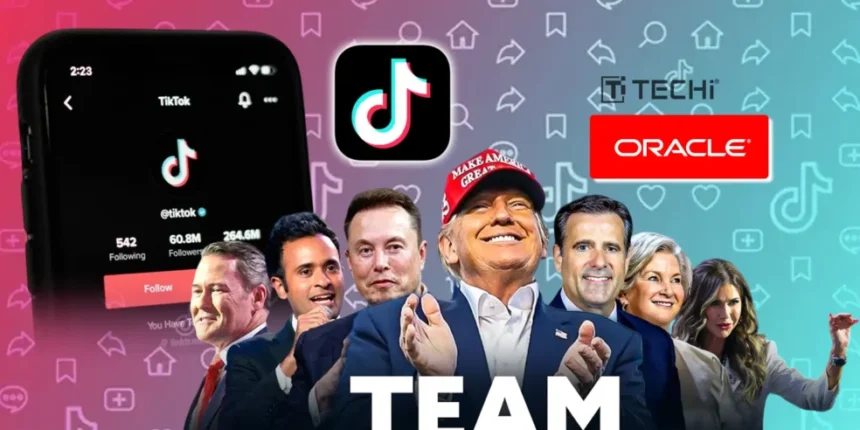
TikTok signs historic $14B US sale to Oracle-led investors. Breaking: January 22, 2026 closing date confirmed. Get complete deal analysis and what changes for users.
- Breaking Down the Historic TikTok Deal Structure
- What Changes for TikTok’s 170 Million American Users
- The Five-Year Journey to This Moment
- National Security Implications and Ongoing Concerns
- Oracle’s Strategic Windfall and Larry Ellison’s Expanding Media Empire
- What Happens Next: Timeline to January 22, 2026
- Impact on TikTok Creators and the Creator Economy
- Lessons for the Technology Industry and Global Trade
- Looking Forward: A New Era for Social Media Platforms
- Conclusion: An Imperfect Solution to an Intractable Problem
- Sources and References
“In the midst of chaos, there is also opportunity.” – Sun Tzu
As someone who has covered technology policy and national security issues for over a decade, I can confidently say that December 18, 2025 marks one of the most significant moments in tech regulation history. TikTok has officially signed binding agreements to divest its US operations to a consortium of American investors, ending a tumultuous five-year saga that threatened to ban the world’s most popular social media platform from the United States.
The deal, confirmed in an internal memo from CEO Shou Chew to employees, will close on January 22, 2026, transferring majority control of TikTok’s US business to an American-led joint venture valued at approximately $14 billion. This represents not just a corporate restructuring but a fundamental realignment of how social media platforms operate in an era of intensifying US-China technological competition.
Breaking Down the Historic TikTok Deal Structure
The new entity, officially named “TikTok USDS Joint Venture LLC,” represents a complex ownership structure designed to satisfy both American national security concerns and Chinese economic interests.
The Investor Consortium
Oracle, Silver Lake and Abu Dhabi-based MGX will collectively own 45% of the U.S. entity, with each managing investor holding a 15 percent stake. This tri-party leadership structure ensures that no single entity controls the platform outright, creating checks and balances that regulators hope will prevent foreign manipulation.
Oracle’s involvement is particularly significant. The cloud computing giant, founded by Trump ally Larry Ellison, will serve dual roles as both investor and “trusted security partner.” Oracle will oversee storage of Americans’ data in US-based data centers and conduct ongoing audits to verify compliance with national security terms.
Silicon Valley private equity powerhouse Silver Lake brings deep experience in technology investments and corporate restructuring. Their participation signals confidence that TikTok’s US operations can remain profitable under the new regulatory framework.
MGX, the United Arab Emirates state-backed investment firm, represents an interesting international dimension. While technically foreign investment, UAE investors are generally viewed more favorably by US regulators than Chinese entities, particularly given the UAE’s strategic partnership with the United States in Middle Eastern affairs.
ByteDance’s Retained Interest
Nearly one-third of the company will be held by affiliates of existing ByteDance investors, and nearly 20% will be retained by ByteDance. This structure is crucial for understanding the deal’s implications. ByteDance isn’t completely divesting; it’s restructuring ownership to comply with US law while maintaining significant economic interest.
ByteDance will continue receiving licensing fees for making its algorithm available to the US operating entity, plus profit distributions proportional to its equity stake. According to earlier reports, the Beijing-based parent company will likely receive approximately 50 percent or more of overall profits from US operations even after American investors take majority control.
This compromise satisfied Chinese government concerns about complete divestiture of a strategic technology asset while addressing American demands for operational control by US entities.
What Changes for TikTok’s 170 Million American Users
The deal fundamentally restructures how TikTok operates in the United States, though most users won’t notice immediate differences in their daily experience.
Algorithm Retraining and Data Sovereignty
The U.S. joint venture will be responsible for “retraining the content recommendation algorithm on U.S. user data to ensure the content feed is free from outside manipulation”. This represents the technical heart of the national security solution.
TikTok’s algorithm, often described as the platform’s “secret sauce,” is what makes the app uniquely addictive. It analyzes user behavior with unprecedented precision to serve perfectly tailored content that keeps people scrolling for hours. American officials have long worried that Chinese government entities could manipulate this algorithm to shape public opinion, suppress certain viewpoints, or amplify content favorable to Beijing’s interests.
Under the new structure, the US version of TikTok will train its recommendation system exclusively on American user data, creating a domestic algorithm independent from the global TikTok platform still controlled by ByteDance. Oracle’s security team will audit code regularly to verify the algorithm operates appropriately without foreign interference.
This creates a curious situation: two versions of TikTok will exist. The US version operates under American oversight with domestic content moderation, while the rest of the world continues using the ByteDance-controlled global platform. Less than 10 percent of TikTok’s estimated 2 billion global users are American, meaning the vast majority of users worldwide won’t experience any changes.
Content Moderation Under American Control
The U.S. joint venture will be responsible for U.S. data protection, algorithm security, content moderation and software assurance. American content moderators, operating under US law and cultural norms, will make decisions about what content violates platform policies.
This addresses longstanding concerns that Chinese censorship priorities might influence content decisions affecting American users. For example, content critical of the Chinese Communist Party that might be suppressed on the global platform could remain visible to US users under domestic moderation standards.
However, this also raises new questions. Will American content moderation prove more or less restrictive than ByteDance’s approach? Will political pressure from US officials influence moderation decisions in ways that Chinese oversight never did? Georgetown University law professor Anupam Chander noted concerns that “the American TikTok might end up censoring or hiding speech that is permissible on the global TikTok platform.”
User Experience Continuity
Despite these structural changes, Chew assured employees that US users will continue “enjoying the same experience as today.” The familiar interface, video editing tools, creator monetization features, and discovery mechanisms will remain unchanged. Advertisers will continue serving global audiences with no immediate impact from the deal.
For creators, this continuity is crucial. TikTok has become an economic engine for millions of Americans who build businesses and audiences on the platform. The deal preserves their ability to create content, build followers, and monetize their influence without disruption.
The Five-Year Journey to This Moment
Understanding this deal requires examining the extraordinary political and legal journey that brought us here, a saga spanning two presidential administrations and involving the highest levels of American and Chinese leadership.
Trump’s First TikTok Ban Attempt (2020)
The story begins in August 2020 when President Donald Trump, during his first term, issued an executive order demanding ByteDance sell TikTok’s US operations. Trump cited national security concerns, arguing that Chinese control over such a popular American app created unacceptable risks of data exploitation and content manipulation.
Microsoft, Oracle, and Walmart emerged as leading contenders to purchase TikTok. However, negotiations stalled amid confusion about Chinese export control laws that restricted technology transfers, ByteDance’s reluctance to sell its crown jewel, and legal challenges from TikTok arguing the ban exceeded presidential authority.
A federal judge temporarily blocked Trump’s executive order, allowing TikTok to continue operating while the legal battle unfolded. The issue remained unresolved when Trump left office in January 2021.
Biden’s Legislative Approach (2024)
The Biden administration took a different tack, working with Congress to create a legal framework rather than relying on executive orders. In 2024, Congress passed the Protecting Americans from Foreign Adversary Controlled Applications Act with strong bipartisan support.
The law required ByteDance to divest TikTok’s US operations or face an effective ban. Unlike Trump’s executive order, this legislation had firmer legal grounding and survived Supreme Court scrutiny. The Court upheld the law in January 2025, finding that Congress had constitutional authority to restrict foreign-controlled platforms based on national security concerns.
However, the law provided flexibility on timing, allowing extensions if progress toward a sale was being made. This created the runway for negotiations to continue even after the initial deadline passed.
Trump’s Second Term: The Dealmaker Returns (2025)
When Trump returned to office in January 2025, he inherited a TikTok technically operating in violation of federal law. Rather than enforcing the ban, Trump issued a series of executive orders delaying enforcement while his administration pursued a negotiated solution.
Trump positioned himself as the dealmaker who could succeed where others had failed. He emphasized his personal relationship with Chinese President Xi Jinping, suggesting that high-level diplomatic engagement could unlock a breakthrough that purely legal or corporate negotiations could not achieve.
In September 2025, The White House and the Chinese government hammered out a deal in principle to sell TikTok’s U.S. operations to a joint venture controlled by a U.S. investor group led by Andreessen Horowitz, Silver Lake and Oracle. Trump signed an executive order approving the framework and extending enforcement deadlines by 120 days to allow the transaction to close.
The deal announced December 18, 2025 represents the culmination of these months of negotiation, satisfying American legal requirements while securing tacit Chinese government approval.
National Security Implications and Ongoing Concerns
While this deal ends TikTok’s immediate legal crisis, significant questions about data security and foreign influence remain.
Does This Actually Solve the Security Problem?
The deal’s structure attempts to address specific vulnerabilities that intelligence officials identified: Chinese government access to American user data and potential algorithm manipulation to influence content Americans see.
By storing data in Oracle’s US data centers with domestic security oversight, the deal creates technical barriers against Chinese intelligence accessing personal information. The algorithm retraining on US data theoretically prevents ByteDance from using content recommendation systems to promote narratives favorable to Beijing.
However, skeptics note that ByteDance retains algorithm ownership and continues providing updates, albeit with American auditor approval. This creates potential vectors for subtle influence that might be difficult to detect. If ByteDance engineers introduce seemingly benign code changes that subtly bias content recommendations, would American auditors catch it?
Congressional Reactions: Not Everyone Is Satisfied
Republican Rep. John Moolenaar of Michigan, the chairman of the House China committee, expressed concern: “Transitioning to a majority American-owned entity would mark an important step in that process that could mitigate some of the ByteDance threat depending on the details, but divestment was not the law’s only requirement”.
Some lawmakers argue the law demanded complete separation from ByteDance, not a restructured joint venture where the Chinese parent retains significant economic interest and algorithm ownership. They worry this compromise creates ongoing vulnerabilities that could be exploited.
However, most Congress members have remained relatively quiet, suggesting cautious acceptance that this deal represents the best achievable outcome given the complex diplomatic, legal, and technical realities involved.
The Precedent for Platform Regulation
This deal establishes important precedents for how democracies can regulate foreign-controlled technology platforms. It demonstrates that governments can mandate ownership restructuring for national security purposes while resping property rights and market principles.
Other countries with concerns about TikTok or similar platforms may study this model as a template for their own regulatory approaches. The European Union, India, and other jurisdictions have taken various actions against TikTok; the US deal provides a potential blueprint for structured solutions short of complete bans.

Oracle’s Strategic Windfall and Larry Ellison’s Expanding Media Empire
The deal represents a major strategic victory for Oracle and its founder Larry Ellison, expanding his family’s influence across multiple corners of American media and entertainment.
Oracle’s Dual Role: Investor and Security Partner
Oracle’s position as both investor and trusted security partner is unique and potentially lucrative. The company will earn returns on its equity investment while also collecting fees for cloud hosting services, security auditing, and technical compliance verification.
Oracle shares jumped more than 5 percent in after-hours trading on December 18 when the deal was confirmed, reflecting investor enthusiasm about this strategic positioning. The company gains not just immediate revenue but also a showcase for its cloud security capabilities that could attract other clients seeking to demonstrate compliance with national security requirements.
The Ellison Family’s Media Consolidation
Larry Ellison’s son, David Ellison, serves as chairman and CEO of Paramount Skydance, which Oracle founder Larry Ellison backed in a major deal completed in 2024. David Ellison has made a hostile bid to take over Warner Bros. Discovery, positioning the family to control vast swaths of American entertainment and media infrastructure.
Adding TikTok to this portfolio creates an empire spanning traditional Hollywood content production, streaming platforms, and social media distribution. This vertical integration mirrors strategies pursued by other tech giants but raises questions about media concentration and the power of individual billionaire families to shape American information ecosystems.
Geopolitical Implications of UAE Investment
MGX’s participation as a major investor introduces an interesting international dimension. The United Arab Emirates has positioned itself as a technology hub and bridge between Western and Asian markets. UAE investment in American technology companies has generally been welcomed by US regulators given the strong strategic partnership between the two nations.
However, some analysts question whether UAE involvement adequately addresses the concerns that motivated the TikTok sale requirement in the first place. If the concern is foreign influence over American information flows, does replacing Chinese ownership with Emirati ownership truly solve the problem, or merely substitute one foreign government’s interests for another’s?
Proponents argue that UAE interests align more closely with American strategic priorities than Chinese ones, particularly regarding Middle Eastern stability, counterterrorism, and containing Iranian influence. The UAE is also significantly more integrated into Western financial and security frameworks than China, providing greater transparency and accountability.
What Happens Next: Timeline to January 22, 2026
While binding agreements have been signed, significant work remains before the deal formally closes.
Regulatory Approvals and Chinese Sign-Off
The deal is expected to need approval from the Chinese government before closing. While Trump has said Chinese President Xi Jinping is on board with the deal, Beijing has not officially confirmed his approval.
Chinese export control laws restrict technology transfers, and Beijing must formally approve the algorithm licensing arrangements and ongoing ByteDance involvement. Past experience suggests Chinese officials may use approval as leverage in broader US-China negotiations over trade, Taiwan, technology restrictions, and other contentious issues.
The Trump administration has expressed confidence that Chinese approval is forthcoming, but until official confirmation comes from Beijing, uncertainty remains. Chinese officials have historically used vague language about “appropriately addressing issues related to TikTok” without providing clear commitments.
Technical Integration and System Separation
The technical work of separating US TikTok operations from the global platform while maintaining interoperability presents significant engineering challenges. Creating a US-specific algorithm trained exclusively on American data while ensuring the app still functions seamlessly requires months of development and testing.
Oracle must build the infrastructure to securely host all US user data with appropriate security controls. The new US entity must establish independent content moderation operations with American teams and policies. Legal frameworks defining the relationship between the US joint venture and ByteDance’s global operations need finalization.
Board Formation and Governance Structure
The new entity will be governed by a seven-member board of directors, with American citizens holding the majority. This board will oversee strategic decisions, ensure compliance with national security commitments, and balance the interests of the diverse investor group.
Identifying qualified board members who command confidence from all stakeholders while having expertise in social media, technology, national security, and US-China relations presents a delicate challenge. The board’s composition will significantly influence how the platform evolves under American control.
Impact on TikTok Creators and the Creator Economy
The deal’s implications extend beyond corporate boardrooms and government offices to millions of creators who built businesses and audiences on TikTok.
Continuity Provides Relief
For creators, the deal’s most important feature is continuity. The months of uncertainty about whether TikTok would be banned created existential anxiety for people whose livelihoods depend on the platform. Dance creators, comedians, small business owners, educators, and countless others have built substantial followings and income streams that would evaporate if TikTok disappeared.
The deal ensures the platform continues operating, preserving these economic relationships. Creators can continue producing content, building audiences, and monetizing their influence without disruption.
Potential Changes to Monetization and E-Commerce
However, Chew’s memo suggests that while the US joint venture will control data protection, algorithm security, content moderation, and software assurance, “ByteDance-controlled global TikTok entity will continue to manage e-commerce, advertising, and marketing on the new US platform.”
This division of responsibilities creates potential complications. If Chinese entities control advertising and e-commerce operations, does this reintroduce the foreign influence concerns the deal aimed to address? Will American creators and businesses be comfortable with Chinese companies managing their commercial activities?
The details of how advertising sales, creator monetization, TikTok Shop e-commerce, and business partnerships will be managed under the new structure remain unclear. Creators are watching closely to ensure their income streams remain intact and their commercial relationships aren’t disrupted.
International Creator Considerations
For creators with global audiences spanning both US and international users, the two-platform structure creates complexity. Will content created for American audiences automatically flow to international TikTok users, or will the platforms maintain separate content libraries? How will creators manage accounts that serve both American and international followers?
These questions will be resolved through technical implementation details not yet publicly disclosed. The goal is seamless interoperability where users don’t perceive any differences, but achieving this while maintaining the data and algorithm separation required by US law presents significant challenges.
Lessons for the Technology Industry and Global Trade
The TikTok deal provides important lessons about technology regulation, national security, and international business in an era of great power competition.
The End of Naive Globalization
For decades, technology companies operated under assumptions of seamless globalization: platforms could serve worldwide audiences from unified systems, data could flow freely across borders, and corporate nationality was largely irrelevant compared to user value and market efficiency.
The TikTok saga shatters these assumptions. In a world of intensifying US-China strategic competition, platform nationality matters enormously. Governments increasingly view data as a strategic asset and information flows as potential vectors for foreign influence. Technology companies must navigate complex geopolitical realities that previous generations didn’t face.
The Viability of Forced Restructuring
The deal demonstrates that governments can mandate ownership restructuring of foreign technology companies for national security purposes. This represents a middle path between allowing unfettered foreign operation and complete prohibition.
Other foreign-owned platforms operating in the United States, and American platforms operating in other countries, will study this precedent carefully. If governments can force ownership changes, restructure platform governance, and mandate data localization, what does this mean for global platform business models?
Balancing Security and Economic Openness
The deal attempts to thread a difficult needle: addressing legitimate security concerns while preserving the economic benefits of foreign investment and international technology exchange. By allowing ByteDance to retain partial ownership and continue receiving profits, the deal avoids complete expropriation that would have set a dangerous precedent for international investment.
However, by requiring operational control to transfer to American entities with robust security oversight, the deal addresses the specific vulnerabilities that motivated action. Whether this balance proves sustainable or creates ongoing tensions remains to be seen.
Looking Forward: A New Era for Social Media Platforms
The TikTok deal marks a watershed moment in how social media platforms operate within and across national borders.
Platform Balkanization Accelerates
The creation of separate US and global TikTok versions accelerates a broader trend toward platform balkanization along national or regional lines. The vision of unified global platforms serving identical content and experiences to worldwide audiences is giving way to fragmented platforms customized for specific jurisdictions.
This fragmentation imposes costs: duplicated infrastructure, reduced network effects, increased complexity for creators serving international audiences, and diminished cross-cultural exchange. However, it may be inevitable given diverging national interests regarding data sovereignty, content moderation, and information control.
Future Regulatory Battles Ahead
While TikTok’s immediate crisis is resolved, the broader questions about how democracies should regulate potentially threatening foreign technology platforms remain contentious and unsettled.
What about other Chinese-owned apps and services? Should similar restrictions apply to gaming platforms, communication apps, or enterprise software? What about platforms owned by other foreign governments? Should Russian, Iranian, or North Korean platforms face restrictions while European platforms don’t?
The TikTok precedent provides a model but doesn’t answer these fundamental questions about where to draw lines, how to balance security with openness, and how to maintain American innovation leadership while protecting national interests.
The Role of Artificial Intelligence
As artificial intelligence capabilities advance, the concerns that motivated TikTok restrictions intensify. AI-powered recommendation algorithms become increasingly sophisticated at understanding and influencing human behavior. The potential for foreign adversaries to use AI to shape public opinion, identify intelligence targets, or predict American behavior grows accordingly.
Future regulatory frameworks will need to grapple with AI-specific challenges that the TikTok deal only partially addresses. The ability to audit AI systems for subtle manipulation becomes more difficult as models become more complex and opaque. The TikTok deal’s emphasis on algorithm retraining and ongoing auditing provides a template, but AI advancement may quickly outpace regulators’ ability to monitor effectively.
Conclusion: An Imperfect Solution to an Intractable Problem
As someone who has tracked this saga from its earliest days, I view the TikTok deal as an imperfect but pragmatic solution to an extraordinarily complex problem balancing national security, economic interests, technological reality, and geopolitical constraints.
The deal doesn’t satisfy purists on either side. National security hawks wanted complete ByteDance divestiture, viewing any continued Chinese involvement as unacceptable risk. Free market advocates opposed government mandates forcing ownership changes based on nationality. Privacy advocates question whether the deal adequately protects user data. Creators worried about disruption to their livelihoods.
Yet the deal threads a difficult needle, creating a path forward when complete impasse seemed likely. It demonstrates that creative corporate restructuring can address security concerns without complete prohibition. It shows that American and Chinese officials can cooperate on narrow issues even amid broader strategic competition. It proves that companies can adapt their business models to accommodate national security requirements.
Whether this solution proves durable depends on implementation details not yet clear and geopolitical developments no one can predict. Will Oracle’s security oversight effectively prevent foreign manipulation? Will the algorithm retraining actually create meaningful separation? Will Chinese officials cooperate fully with ongoing American auditing? Will new technologies or threats emerge that render this structure inadequate?
The January 22, 2026 closing date is not an ending but a beginning: the start of a new chapter in how social media platforms operate under intensifying scrutiny from governments concerned about data sovereignty, foreign influence, and information integrity. The TikTok story will continue evolving, providing ongoing lessons about technology, security, and governance in an interconnected but increasingly contested world.
For the 170 million Americans who use TikTok daily, the most important immediate takeaway is simple: the app will continue operating. The videos will keep playing, the creators will keep creating, and the platform that reshaped how we consume and create content will remain a fixture of American digital life. The complex geopolitics, corporate maneuvering, and regulatory frameworks operating behind the scenes may be invisible to most users, but they fundamentally shape the platforms we’ve come to depend on.
As we move forward into 2026, the TikTok deal stands as a landmark moment in technology regulation: a test case for how democracies can protect national interests while remaining open to global innovation, how governments can regulate powerful platforms without stifling creativity, and how competing superpowers can find narrow agreements even amid broader strategic competition. The lessons from this deal will resonate far beyond TikTok, influencing how we think about technology, sovereignty, and security for years to come.
Sources and References
- CNN Business – TikTok has signed the deal to spin off its US entity with American investor group
- Axios – Scoop: TikTok signs deal for sale of U.S. unit after yearslong saga
- NBC News – TikTok owner ByteDance signs binding deal to create U.S. joint venture
- CNBC – TikTok signs agreement to create new U.S. joint venture
- NPR – TikTok signs deal to give U.S. operations to Oracle-led investor group
- CBS News – TikTok signs deal for sale of U.S. entity to American investors