


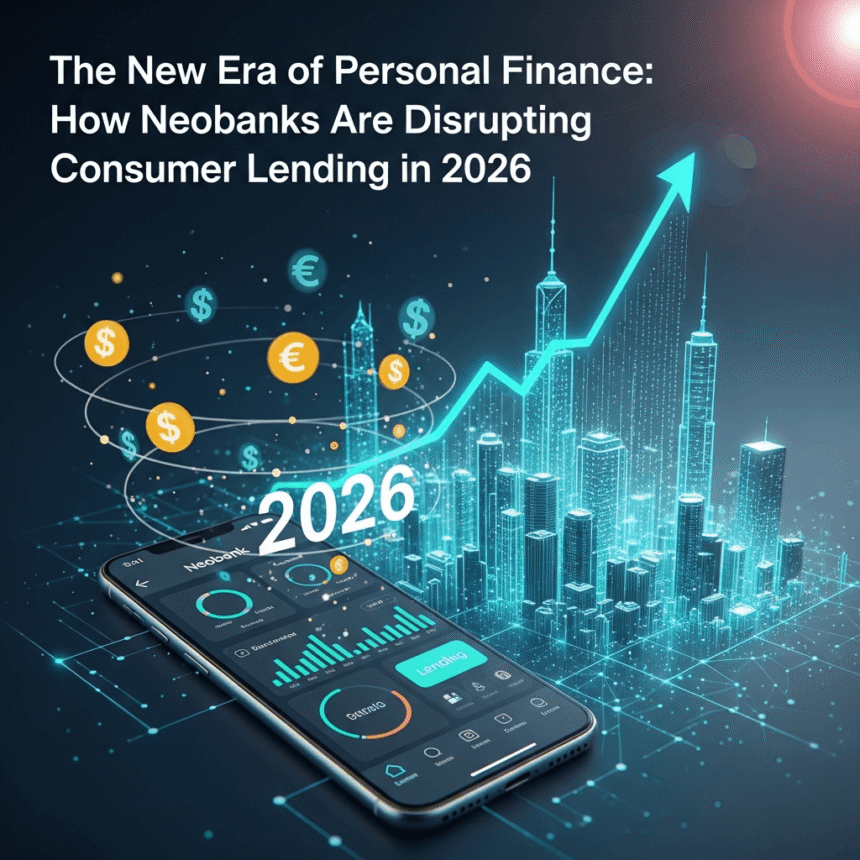
The financial landscape is undergoing a monumental shift as we progress through 2026. For decades, the traditional banking model remained largely unchallenged, defined by brick and mortar branches, rigid credit scoring, and lengthy approval processes. However, a new breed of financial institutions has emerged to flip the script. Neobanks, or digital-only banks, are no longer just niche alternatives for tech-savvy early adopters. They are now the primary drivers of innovation in the consumer lending sector.
- The Architecture of Disruption: Why Neobanks Are Winning
- The Rise of Instant Gratification: Real-Time Loan Approvals
- Open Banking and the Empowerment of the Consumer
- Digital Mortgages: The Final Frontier of Lending Disruption
- The Impact on Small Business Capital
- Regulatory Evolution and Data Privacy
- The Future of the Lending Ecosystem
- Conclusion
By leveraging advanced technologies such as machine learning and open banking frameworks, these agile players are redefining what it means to borrow money. As we look at the data for early 2026, the global neobanking market is estimated to reach a staggering $552 billion, growing at a compound annual growth rate of 45 percent. This growth is not merely a result of better mobile apps; it is a fundamental disruption of the lending value chain.
The Architecture of Disruption: Why Neobanks Are Winning
Traditional banks are often hampered by legacy infrastructure that dates back several decades. These aging systems make it difficult to integrate real-time data or launch new products quickly. In contrast, neobanks are born in the cloud. They operate without the massive overhead of physical branches and the bureaucratic layers of legacy management.
This structural advantage allows neobanks to offer lower interest rates on personal loans and higher yields on savings accounts. Because their operational costs are up to 60 percent lower than those of traditional incumbents, they can pass these savings directly to the consumer. Furthermore, their “mobile-first” philosophy ensures that every financial product is optimized for the device that people use most: their smartphone.
The Shift from Traditional Credit Scores to AI Underwriting
One of the most significant ways neobanks are disrupting consumer lending is by moving beyond the traditional FICO score. For years, a person’s creditworthiness was determined by a narrow set of historical data points. This often left millions of “credit invisible” individuals, such as young professionals, immigrants, and gig economy workers, without access to affordable capital.
In 2026, neobanks are utilizing sophisticated artificial intelligence models to analyze alternative data. Instead of just looking at past debt, these AI-driven systems evaluate real-time cash flow, utility payment history, and even behavioral patterns. Recent industry reports suggest that AI underwriting can increase loan approval rates by 18 to 32 percent while simultaneously reducing bad debt by over 50 percent. This creates a win-win scenario where more people get access to credit and lenders face less risk.
The Rise of Instant Gratification: Real-Time Loan Approvals
In the traditional world, applying for a personal loan or a mortgage could take days or even weeks. Documents had to be scanned, mailed, or hand-delivered to a branch for manual review. In the digital era of 2026, this level of friction is no longer acceptable to the modern consumer.
Neobanks have pioneered the concept of “instant decisioning.” By connecting directly to a user’s payroll provider or existing bank accounts through secure APIs, these platforms can verify income and employment in seconds. This allows for a seamless “apply-and-buy” experience. Whether a consumer is looking for a small personal loan for home improvements or seeking to refinance existing high-interest debt, the process is now measured in minutes rather than days.
Personal Loans and Debt Consolidation Trends in 2026
As of early 2026, personal loans have become the fastest-growing segment of consumer credit. Neobanks are capturing a significant portion of this market by focusing on debt consolidation. With interest rates fluctuating, many consumers are turning to digital lenders to combine multiple high-interest credit card balances into a single, lower-interest monthly payment.
Top neobanks such as Chime, SoFi, and Revolut are dominating this space by offering personalized loan terms that adapt to a user’s financial health. These platforms provide 24/7 access to loan management tools, allowing borrowers to adjust payment dates or view their remaining balance with a few taps. This transparency builds a level of trust that traditional institutions have historically struggled to maintain.
Open Banking and the Empowerment of the Consumer
The arrival of April 2026 marks a pivotal moment in the United States with the implementation of the Consumer Financial Protection Bureau (CFPB) open banking rules. This regulation mandates that financial institutions must allow consumers to share their financial data with third-party providers securely and for free.
This shift effectively breaks the data monopoly held by big banks. When a consumer applies for a loan at a neobank, they can now instantly port over years of transaction history from their old bank. This creates a competitive environment where lenders must compete for the consumer’s business by offering the most attractive rates and terms. Open banking is the engine that drives financial inclusion and ensures that the consumer, not the bank, owns their financial identity.
Digital Mortgages: The Final Frontier of Lending Disruption
While personal loans were the first to be disrupted, 2026 is seeing a massive surge in digital mortgage origination. The mortgage process has long been considered the most complex and paper-heavy transaction in finance. Neobanks and specialized digital mortgage platforms are changing this by integrating title insurance, appraisal data, and income verification into a unified digital workflow.
By automating the “back office” of mortgage lending, neobanks are reducing closing times from the industry average of 45 days down to less than 15 days. For the consumer, this means fewer headaches and lower closing costs. Furthermore, the use of blockchain technology for property records in certain jurisdictions is beginning to streamline the process even further, providing a transparent and immutable record of ownership.
Best Practices for Borrowing in the Digital Age
As the lending landscape becomes more crowded, consumers must stay informed to make the best financial decisions. Here are several key strategies for navigating neobank lending in 2026:
- Monitor Your Alternative Credit Data: Since many neobanks look at cash flow, ensure your bank accounts reflect consistent income and responsible spending.
- Compare APRs, Not Just Monthly Payments: Always look at the Annual Percentage Rate to understand the true cost of borrowing, including any hidden fees.
- Utilize Pre-Qualification Tools: Most neobanks offer a soft credit check that allows you to see your potential rate without affecting your credit score.
- Check for Flexibility: Look for lenders that offer features like unemployment protection or the ability to skip a payment in case of an emergency.
The Impact on Small Business Capital
Neobanks are also revolutionizing the way small businesses access working capital. Traditional commercial lending often requires extensive collateral and years of tax returns. Digital business banks are filling the gap by providing lines of credit based on real-time sales data from e-commerce platforms like Shopify or payment processors like Stripe.
In 2026, a small business owner can receive a “capital offer” during their morning coffee based on their previous day’s sales performance. This level of agility is critical for entrepreneurs who need to manage inventory or cover unexpected expenses in a fast-paced global economy.
Regulatory Evolution and Data Privacy
With the rapid expansion of digital lending comes increased scrutiny from regulators. In 2026, the focus has shifted toward ensuring that AI models are transparent and free from bias. Regulators are demanding “explainability” in automated lending decisions to ensure that no demographic is unfairly excluded from credit.
Data privacy remains a top concern for consumers. Neobanks are responding by implementing zero-trust security models and biometric authentication. As banks become more like tech companies, the protection of sensitive financial data has become the ultimate competitive advantage. Those who can prove they are the most secure will win the long-term loyalty of the consumer.
The Future of the Lending Ecosystem
Looking toward the end of 2026 and into 2027, we expect to see even more convergence between banking and other lifestyle services. The rise of “super apps” means that a consumer might book a flight, purchase travel insurance, and secure a small loan for the trip all within the same ecosystem.
Furthermore, the integration of regulated stablecoins and central bank digital currencies (CBDCs) could lead to near-instant settlement of loans, removing the delays associated with the traditional clearinghouse systems. The disruption we are seeing today is only the beginning of a total transformation of the global financial system.
Conclusion
The disruption of consumer lending by neobanks is a testament to the power of technology to improve the lives of everyday people. By prioritizing the user experience, utilizing data more intelligently, and operating with a leaner cost structure, these institutions have forced the entire financial sector to evolve. For the consumer, this means more choices, better rates, and a level of convenience that was once unimaginable.
As we move deeper into 2026, the line between a “tech company” and a “bank” will continue to blur. Those who embrace this digital-first reality will be best positioned to thrive in the new financial landscape. Whether you are looking for a personal loan, a mortgage, or simply a better way to manage your daily expenses, the neobank revolution has something to offer.