

Date: December 4, 2025
As we stand in the final month of 2025, the technological landscape has shifted decisively. We are no longer discussing the “potential” of artificial intelligence or the “theoretical” power of quantum computing. We are discussing deployment, integration, and the massive capital flows driving these sectors. For investors, business leaders, and tech enthusiasts, the conversation has moved from “what if” to “what now.”
This comprehensive analysis explores the three pillars currently propping up the trillion-dollar tech economy: Agentic AI, Consumer Electronics, and Quantum Computing. We will dissect how these technologies are not just co-existing but converging to create new asset classes and operational realities for 2026.
The Age of Agentic AI: From Chatbots to Digital Employees
The most significant shift in 2025 has been the graduation of AI from “Generative” to “Agentic.” While 2024 was defined by Large Language Models (LLMs) that could write poetry or code, 2025 is defined by Large Action Models (LAMs) that can execute tasks.
The Rise of Autonomous Enterprise Agents
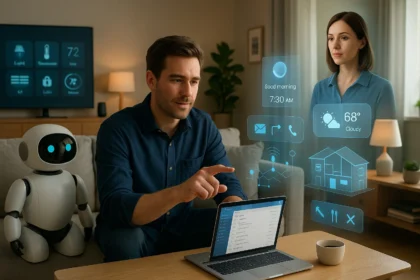
Businesses are no longer looking for AI that can summarize a meeting; they are deploying AI that can schedule the meeting, book the venue, and negotiate the catering contract without human oversight. This is the domain of Agentic AI.
Why This Matters for Business Efficiency:
- Workflow Automation: Platforms like HubSpot and Salesforce have integrated agentic capabilities that allow for end-to-end sales prospecting. An AI agent can now identify a lead, research their company, craft a personalized outreach email, and update the CRM, all while you sleep.
- Customer Service Revolution: We are seeing the deployment of “Tier 1” support agents that have full autonomy to issue refunds, update shipping addresses, and troubleshoot technical issues by directly accessing backend databases. This is not a “decision tree” bot; this is an AI with reasoning capabilities.
Market Leaders to Watch:
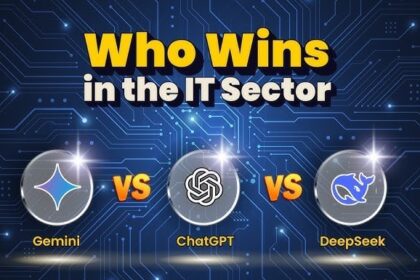
- Google (Gemini 3): The recently released Gemini 3 model has set a new benchmark for multi-step reasoning. Its ability to handle “long-horizon” tasks—projects that require planning over days or weeks—is unprecedented.
- Microsoft & OpenAI: The integration of “Operator” agents into the Microsoft 365 Copilot ecosystem means that Excel and Word are no longer just tools but active collaborators that can perform independent research.
Investment Opportunities in AI Infrastructure
The software is only as good as the hardware running it. The demand for Edge AI—processing data locally on devices rather than in the cloud—is driving a secondary boom in semiconductor stocks.
- NPU Integration: Every major laptop and smartphone released in Q4 2025 features a dedicated Neural Processing Unit (NPU). Companies like Qualcomm and AMD are seeing massive uptake in their AI-specific chipsets.
- Data Center Cooling: As AI models grow, so does their heat output. Liquid cooling solutions for data centers have become a critical sector, with companies specializing in sustainable cooling seeing stock valuations soar.
Quantum Computing: The Financial Security Frontier
If AI is the engine of 2025, Quantum Computing is the lock on the door. The financial sector is currently in a “Code Red” state regarding cybersecurity, driven by the looming threat of Q-Day—the day a quantum computer can crack standard encryption.
The “Harvest Now, Decrypt Later” Threat
Cybercriminals and state actors are currently stealing vast amounts of encrypted data. They cannot read it yet, but they are storing it with the intention of unlocking it once powerful quantum computers become available. This strategy, known as Harvest Now, Decrypt Later (HNDL), has forced banks and governments to act now.
Post-Quantum Cryptography (PQC) Adoption
The National Institute of Standards and Technology (NIST) finalized its PQC standards earlier this year, triggering a massive upgrade cycle in global IT infrastructure.
- Quantum DeFi: A major development this week is the filing of a US patent by 01 Quantum Inc. for a “Quantum DeFi Wrapper.” This technology aims to protect Decentralized Finance (DeFi) operations from quantum attacks. It acts as a “circuit breaker,” halting smart contract operations if it detects a threat that classical encryption cannot handle.
- Banking Infrastructure: Major institutions like JPMorgan Chase and Bank of America are heavily investing in “Crypto-Agility”—the ability to swap out encryption algorithms quickly without bringing down the network. This is creating a boom for cybersecurity consultancy firms.
Key Investment Vertical: Quantum-Safe Networking. Companies that provide “Quantum Key Distribution” (QKD) and PQC-compliant hardware security modules (HSMs) are positioned for exponential growth in 2026.
Consumer Electronics: The “Spatial” and “Sustainable” Shift
The consumer electronics market in December 2025 is defined by two trends: the normalization of face-worn computers and a demand for hyper-efficiency.
The Smart Glasses Explosion
The skepticism of the Google Glass era is dead. Thanks to the massive success of the Meta Ray-Ban collaborations, smart glasses are the “must-have” gift of the 2025 holiday season.
- Multimodal AI on Your Face: These devices now feature cameras that pipe visual data directly into AI models. You can look at a menu in a foreign language and hear the translation in your ear instantly. You can look at a broken appliance, and the AI will verbally guide you through the repair process.
- Health Integration: New entrants like the NAQI Neural Earbuds are pushing the boundaries of “hearables.” These devices use gyroscopic technology to allow users to control computers with subtle head movements, a game-changer for accessibility.
Sustainable Gadgets
Consumers are increasingly voting with their wallets for green tech.
- Kara Pod: A breakout hit from CES 2025, this device turns atmospheric humidity into water and then brews coffee. It eliminates the need for a water line and reduces plastic waste, appealing to the eco-conscious luxury market.
- Right-to-Repair: The Nothing Phone 3a Community Edition, launching this month, is being celebrated not just for its unique “glow-in-the-dark” aesthetic but for its modular design that encourages user repair. This community-driven approach is challenging the “walled garden” model of Apple and Samsung.
Financial Market Pulse: December 4, 2025
For the active investor, here is the current state of play:
- Aerospace & Defense: With the recent Airbus A320 recall due to solar radiation issues (a major story from late November), money is rotating into defense contractors and older legacy carriers like Boeing, despite their own past struggles.
- Tech ETFs: Funds focusing on Cybersecurity (CIBR) and Semiconductors (SOXX) remain the strongest performers. However, a new category of “Quantum & AI” ETFs is emerging, offering exposure to smaller, pure-play quantum hardware firms.
- Crypto Markets: Bitcoin remains a store of value, but the real velocity is in Real World Assets (RWA). Tokenized treasury bills and real estate funds are seeing billions in inflows as traditional finance (TradFi) merges with decentralized finance (DeFi).
Live Daily Updates: Tech News Brief
- 09:00 AM EST: Nvidia announces a partnership with Siemens to build the “Industrial Metaverse,” a digital twin platform for manufacturing plants powered by Agentic AI.
- 10:30 AM EST: 01 Quantum Inc. stock spikes 15% following the announcement of their US patent filing for Quantum DeFi protection.
- 01:00 PM EST: Google Cloud releases a white paper detailing how “Agentic AI” will reduce enterprise operational costs by 30% in 2026.
- 04:00 PM EST: Reports circulate that Apple is accelerating the production of its cheaper “Vision Air” headset, targeting a Q2 2026 launch to compete with the influx of smart glasses.
Conclusion: The Strategy for 2026
The convergence of Agentic AI, Quantum Security, and Spatial Computing creates a “winner takes all” dynamic. Businesses that adopt autonomous agents today will outpace competitors by orders of magnitude in efficiency. Investors who recognize the necessity of Quantum Security will find safety in a volatile digital world. And consumers who embrace spatial computing will find their interaction with reality fundamentally augmented.
The future is not just automated; it is autonomous. The question is no longer “can we build it?” but “can we secure it?”
Source Links:
- ABI Research: Top 8 AI Trends for 2025
- Google Cloud: AI Business Trends 2025
- 01 Quantum Files US Patent for DeFi Security
- Smithsonian: Coolest Inventions from CES 2025
The following video provides a visual roundup of the best gadgets from 2025, offering a tangible look at the consumer tech discussed in this article.