


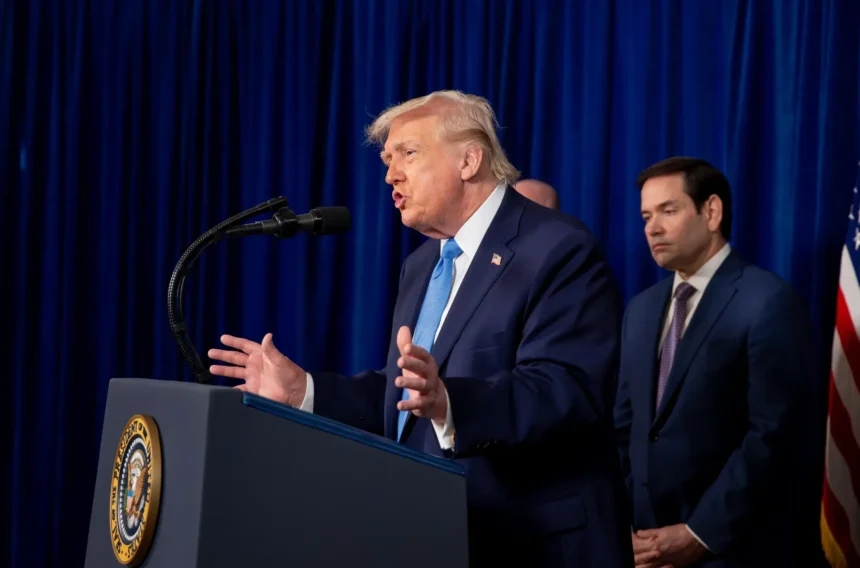
The global energy landscape faced a seismic shift this week as President Donald Trump convened an emergency summit with the world’s leading oil and gas executives. On January 9, 2026, the White House became the center of a high-stakes geopolitical drama where the future of the world’s largest oil reserves was laid on the table. Following the capture of former leader Nicolás Maduro earlier this month, the administration has moved with aggressive speed to assert control over the Venezuelan energy sector. However, the ambitious pitch to transform Venezuela into a massive energy hub for the United States was met with a surprising wall of skepticism from the very titans of industry expected to lead the charge.
- The 100 Billion Dollar Pitch for Energy Independence
- Why Oil Executives Call Venezuela Uninvestible in 2026
- The Profitability Paradox of 50 Dollar Oil
- Infrastructure in Decay: A Technical Nightmare
- The Role of Chevron and Existing Operations
- Geopolitical Risks and the Shadow of China
- Financial Risks: The Billions Still Owed
- Environmental and Social Governance (ESG) in a Post-Maduro Era
- Market Volatility and the Global Supply Chain
- Live Updates: The Situation as of January 10, 2026
- The Long Road to Recovery
The 100 Billion Dollar Pitch for Energy Independence
President Trump stood in the East Room on Friday and outlined a vision that would effectively reshape the Western Hemisphere’s economy. The proposal is simple yet massive: he wants American oil companies to invest at least 100 billion dollars into Venezuela to rebuild its crumbling energy infrastructure. The goal of this initiative is to flood the global market with Venezuelan crude, driving prices down to 50 dollars per barrel. By doing so, the administration hopes to provide permanent relief to American consumers at the pump while simultaneously stabilizing a nation that has been in economic freefall for two decades.
The President emphasized that this would not be a government-funded project. Instead, he called on the private sector to step up and use their vast capital reserves to modernize the “rotted” pipelines, refineries, and drilling platforms of PDVSA, the state-owned oil company. During the meeting, Trump promised “total security” and “total safety” for any company willing to commit. He suggested that the United States government would act as the ultimate guarantor of these investments, effectively bypassing the traditional legal hurdles associated with foreign energy ventures.
Why Oil Executives Call Venezuela Uninvestible in 2026
Despite the President’s enthusiastic rhetoric, the response from industry leaders was far more cautious. Darren Woods, the CEO of ExxonMobil, delivered a blunt assessment that has since echoed through the halls of global finance. Woods stated clearly that, under current conditions, Venezuela remains uninvestible. This sentiment is rooted in a long and painful history. ExxonMobil has had its assets in the country seized twice by the Venezuelan government in the past, leading to years of litigation and billions of dollars in lost value.
For executives like Woods, a promise of security from a sitting president is not the same as a stable, long-term legal framework. The energy industry operates on decades-long timelines. A project started in 2026 might not see a return on investment until the 2040s. Without a binding treaty or a complete overhaul of the Venezuelan legal system, companies fear that a future change in government in either Washington or Caracas could leave them vulnerable once again.
The Profitability Paradox of 50 Dollar Oil
One of the most significant points of contention during the summit was the administration’s target price for crude oil. Trump’s stated goal is to bring global prices down to 50 dollars per barrel. While this would be a victory for the American consumer, energy analysts warn that it might be a death knell for the very companies asked to invest.
Economics in the Orinoco Belt, where most of Venezuela’s oil is located, are notoriously difficult. The crude found there is “extra-heavy,” meaning it is thick, viscous, and requires expensive technology to extract and refine. Experts from firms like Wood Mackenzie suggest that for new projects in Venezuela to be profitable, oil prices need to remain at or above 80 dollars per barrel. If the President succeeds in driving the price down to 50 dollars, the margin for profit disappears. This creates a fundamental paradox: the administration wants companies to spend 100 billion dollars to create a market environment where they cannot make a profit.
Infrastructure in Decay: A Technical Nightmare
The physical reality of the Venezuelan oil industry is another massive barrier to entry. After years of mismanagement and underinvestment, the infrastructure is in a state of catastrophic failure. Pipelines are rusted through, refineries have been stripped for parts, and the electrical grid required to power massive drilling operations is prone to constant blackouts.
Rebuilding this network would require more than just money; it would require an unprecedented mobilization of technical expertise and equipment. Secretary of Energy Chris Wright has indicated that the United States is prepared to authorize the import of high-tech oil field equipment to begin the modernization process. However, logistics experts warn that the sheer scale of the neglect means it could take five to ten years of constant work before production levels return to their 1990s peak of 3 million barrels per day.
The Role of Chevron and Existing Operations
While many companies are hesitant, Chevron occupies a unique position. As the only major American oil firm that maintained a continuous presence in Venezuela during the Maduro era, it has the most to gain and the most to lose. CEO Mike Wirth has been more diplomatic than his counterparts, suggesting that Chevron is looking to ramp up its existing presence. Because Chevron already has established logistics and personnel on the ground, it does not face the same “start-up” hurdles as Exxon or ConocoPhillips.
However, even Chevron is moving with extreme care. The company has emphasized that it will only operate in full compliance with international laws and regulations. The existing licenses that allow Chevron to operate are specific and limited, and any expansion would require a significant roll-back of remaining sanctions.
Geopolitical Risks and the Shadow of China
A major motivation for the Trump administration’s aggressive stance is the desire to push foreign adversaries out of the region. Currently, China holds a dominant position in the Venezuelan oil market, accounting for over 80 percent of exports as of late 2025. This relationship was built on a series of “loans-for-oil” deals that Maduro used to keep his regime afloat.
By asserting American control over the energy sector, the Trump administration aims to break China’s grip on the Western Hemisphere. However, this raises questions about how the United States will handle existing debts and contracts between Venezuela and Beijing. If American companies take over fields that were previously pledged to China, it could trigger a series of international legal battles or even a direct diplomatic confrontation.
Financial Risks: The Billions Still Owed
One cannot discuss investment in Venezuela without mentioning the outstanding debts. Companies like ConocoPhillips and ExxonMobil are still owed billions of dollars following the expropriation of their assets by Hugo Chávez and Nicolás Maduro. At the recent summit, President Trump told executives that they should not expect special consideration for these old debts in new deal-making.
This stance has frustrated many in the boardrooms of the “Supermajors.” For them, the unpaid billions are a constant reminder of why they left in the first place. Re-entering a country that has not yet settled its previous debts is a violation of basic corporate governance for many of these firms.
Environmental and Social Governance (ESG) in a Post-Maduro Era
In the modern investment landscape, Environmental and Social Governance (ESG) factors are more important than ever. Venezuela presents a massive challenge in this area. The environmental damage caused by years of neglect is widespread, with massive oil spills in Lake Maracaibo and significant methane leaks across the Orinoco Belt.
Any American company entering the fray would be expected to clean up these environmental disasters while simultaneously ramping up production. Furthermore, the social aspect of investment is complicated by the ongoing political transition. While the administration promises stability, the reality on the ground remains fluid, and companies are wary of being associated with any potential human rights concerns during the transition of power.
Market Volatility and the Global Supply Chain
The potential influx of millions of barrels of Venezuelan crude would have a profound impact on the global supply chain. OPEC+ members, particularly Saudi Arabia and Russia, are watching these developments with high concern. If the United States successfully restarts the Venezuelan engine, it could lead to a global supply glut that further depresses prices worldwide.
For global investors, this creates a period of intense market volatility. Energy stocks have seen wild swings since the news of Maduro’s capture, with companies that have potential Venezuelan exposure seeing both massive gains and sharp sell-offs as the reality of the challenges becomes clearer.
Live Updates: The Situation as of January 10, 2026
- Diplomatic Mission: A United States delegation has arrived in Caracas to begin technical and logistical assessments of the oil fields. This is the first official mission of this scale in over a decade.
- Asset Seizure: The U.S. Treasury Department has confirmed it is holding several Venezuelan tankers in the Caribbean, with the intent to sell the cargo and place the proceeds into U.S.-controlled accounts.
- Internal Power Struggles: While the U.S. recognizes interim authorities, various factions within the Venezuelan military and PDVSA are still negotiating their roles in the new energy landscape.
- Corporate Movement: Smaller, independent oil producers like Hilcorp have expressed more enthusiasm for the President’s plan than the larger majors, seeing it as an opportunity to acquire assets that the giants might overlook.
The Long Road to Recovery
The consensus among energy economists is that while Venezuela holds the potential to be a global energy powerhouse once again, there are no quick fixes. The “100 Billion Dollar Pitch” is a bold opening move in a game that will take years to play out. The skepticism shown by oil executives is not a rejection of the opportunity, but rather a demand for a more realistic and legally sound plan.
For the Trump administration, the challenge will be to translate a high-level vision into the granular, legal, and technical framework that the private sector requires. Until then, the world’s largest oil reserves remain a “sleeping giant” that many are eager to wake, but few are willing to touch.