


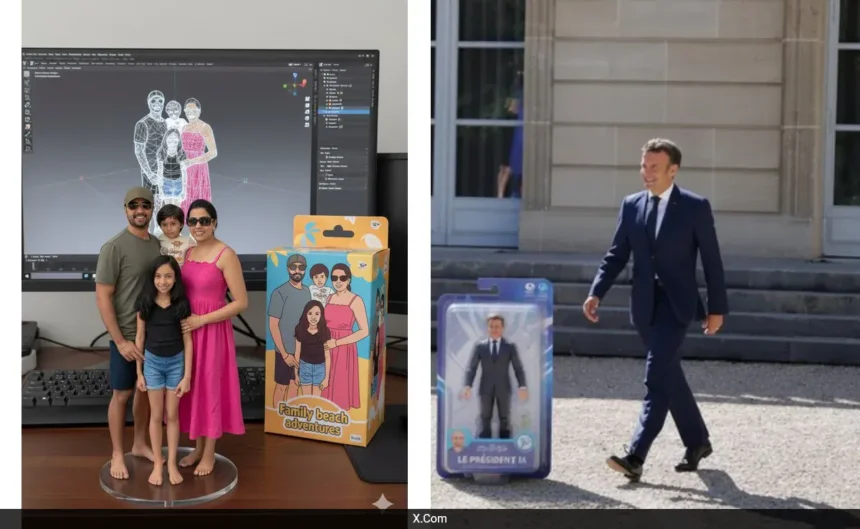
Discover why 10 million users created AI 3D figurines in one week. Nano Banana, Veo 3 video, speech-to-song tools going viral. Try them yourself now.
- The 3D Figurine Phenomenon: How Nano Banana Broke the Internet
- Veo 3 Fast: Professional Video Creation from Text Prompts
- Speech-to-Song: The Viral Audio Transformation Everyone’s Trying
- AI-Powered Editing: The Hidden Productivity Revolution
- The Psychology Behind the Rush: Why These Features Specifically
- The Business Implications: Why Creators and Brands Are Rushing
- The Darker Side: Concerns and Controversies
- What’s Coming Next: 2026 AI Feature Predictions
- Practical Guide: How to Leverage These Tools Before Everyone Else Does
- Conclusion: The AI Democratization Moment We’re Living Through
- Sources and References
“Innovation distinguishes between a leader and a follower.” – Steve Jobs
As someone who has tracked viral technology trends for over a decade, I can tell you that December 19, 2025 represents a watershed moment in how everyday people interact with artificial intelligence. We’re witnessing something remarkable: mainstream adoption of generative AI tools happening at a pace that makes ChatGPT’s initial explosion look slow by comparison. In the first week of September 2025 alone, Google’s Nano Banana image generation model brought in 10 million new Gemini users and generated 200 million images, creating a viral phenomenon that has fundamentally changed how people think about AI.
But Nano Banana is just the tip of the iceberg. YouTube’s integration of Google DeepMind’s Veo 3 Fast for video generation, speech-to-song remixing tools that turn dialogue into catchy soundtracks, and AI-powered editing assistants are transforming content creation from a specialized skill into something anyone with a smartphone can do. The rush to use these features isn’t driven by tech enthusiasts experimenting with new tools. It’s driven by everyday people discovering that AI can now do things that feel like magic: turning their photos into detailed 3D toy figurines, generating professional-quality video clips with sound from simple text descriptions, and remixing ordinary dialogue into viral music tracks.
Understanding why these specific AI features are causing such a rush, and how you can leverage them before they become oversaturated, could be the difference between being an early adopter who captures attention and being part of the crowd arriving late to the party.
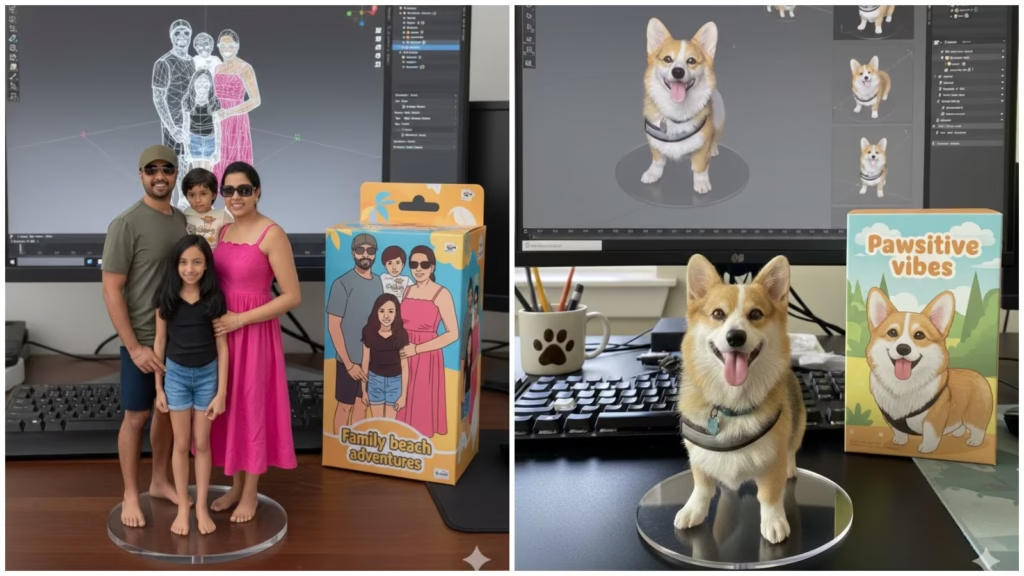
The 3D Figurine Phenomenon: How Nano Banana Broke the Internet
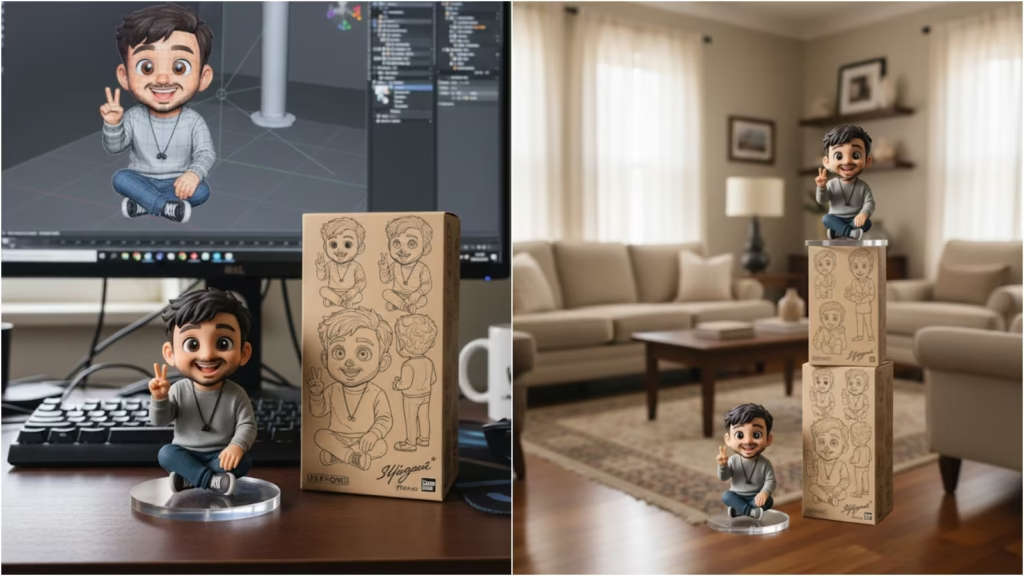
In September 2025, a new AI trend exploded across social media with unprecedented velocity. Within days, millions of people were sharing images of themselves transformed into detailed 3D toy figurines, complete with miniature packaging that made them look like collectible action figures.
The Numbers Behind the Viral Explosion
Google’s VP Josh Woodward revealed that in Nano Banana’s first week, the model generated 200 million images and brought in 10 million new users to Gemini. To put that in perspective, that’s 1 million users per hour at peak times, making it one of the fastest viral adoption rates for any AI tool in history.
The trend wasn’t confined to one platform. On X (formerly Twitter), Instagram, TikTok, and Facebook, the hashtag #3DFigurine accumulated millions of posts as everyone from celebrities to politicians to everyday users rushed to see themselves as toy figures. The phenomenon became so ubiquitous that Google itself promoted the trend by posting Nano Banana-generated images on their official social media accounts.
Why the 3D Figurine Trend Resonated So Powerfully
Unlike previous AI image trends that required technical prompting skills or produced inconsistent results, the figurine trend succeeded because it delivered immediate, shareable joy. Seeing yourself as a toy figure triggers nostalgic connections to childhood action figures while creating a novel, personalized memento that people naturally want to share.
The trend also benefits from what I call “universal appeal specificity”: everyone can participate regardless of age, location, or interests, yet each person’s result is uniquely personal. You’re not just making generic AI art; you’re creating a miniature version of yourself that captures your specific style, profession, or personality.
The technical execution matters too. Nano Banana produces remarkably consistent quality with detailed features, realistic lighting, and authentic toy packaging aesthetics. The results look professional enough to share publicly without embarrassment, lowering the barrier for participation.
How to Create Your Own AI 3D Figurine
Creating your viral 3D figurine takes minutes:
Step One: Access Google Gemini’s 2.5 Flash Image model, better known as Nano Banana, through the Gemini web interface or app.
Step Two: Upload a clear, well-lit photo of yourself. Front-facing photos with good lighting produce the best results.
Step Three: Use a prompt like: “Create a 3D toy figurine of this person in detailed packaging, realistic toy design, collectible action figure style, professional product photography.”
Step Four: Customize your figurine by adding props, changing outfits, or specifying themes. You can request “coffee cup and laptop for digital marketer figurine” or “chef’s outfit with cooking utensils” to personalize the result.
Step Five: Generate multiple variations and select your favorite. Nano Banana typically produces four options per prompt, each with slight variations.
The entire process takes three to five minutes from photo upload to shareable final image, explaining why the trend spread so rapidly.
Veo 3 Fast: Professional Video Creation from Text Prompts
While 3D figurines captured social media attention, YouTube’s integration of Google DeepMind’s Veo 3 Fast into YouTube Shorts represents an even more significant shift in content creation capabilities.
From Text to Video in Seconds
Veo 3 Fast generates high-quality video clips with accompanying audio from simple text descriptions, all directly within the YouTube Shorts creation interface. This isn’t just converting text to slideshows or animating static images. It’s creating entirely new video content that looks professionally shot, complete with camera movements, lighting changes, and synchronized sound.
The technical achievement is staggering. Previous AI video tools like Runway and early Sora versions required significant patience, often produced inconsistent quality, and rarely included synchronized audio. Veo 3 Fast delivers sharper video quality, improved prompt matching, and most critically for viral adoption, operates with lower latency at 480p resolution optimized for mobile creation and sharing.
Real-World Applications Driving Adoption
YouTube creators are rushing to Veo 3 Fast for several practical reasons:
Background Generation: Creators filming against plain walls can now generate elaborate backgrounds, from tropical beaches to futuristic cityscapes, without green screens or expensive sets.
B-Roll Creation: Podcasters and talking-head creators can instantly generate relevant b-roll footage to illustrate points without filming or licensing stock footage.
Concept Visualization: Educational content creators explain abstract concepts by generating visualization videos that would be impossible or prohibitively expensive to film.
Viral Shorts Production: The speed of generation enables creators to capitalize on trending topics quickly, producing relevant content while topics are still hot.
The Expanded Veo Ecosystem
YouTube is rolling out additional Veo-powered capabilities that multiply creative possibilities:
Add Motion: Brings static photos to life by applying movement from other videos. You can make your product photos dance or apply sports moves to casual snapshots.
Stylize Video: Transforms existing footage with artistic filters like pop-art, origami, or watercolor styles, completely changing the aesthetic with a single tap.
Add Objects: Inserts props, characters, or effects into existing scenes through text descriptions. Add a rubber ducky to your morning coffee video or generate a giant octopus in harbor footage.
These features are currently in testing and rolling out gradually, but early access creators report that the motion transfer technology is particularly impressive, capturing and applying complex movements with surprising accuracy.
Speech-to-Song: The Viral Audio Transformation Everyone’s Trying
Perhaps the most delightfully absurd AI feature gaining traction is YouTube’s speech-to-song tool, which remixes dialogue from videos into catchy musical soundtracks using Google DeepMind’s Lyria 2 music model.
How Speech-to-Song Works
The feature analyzes dialogue from eligible videos, extracts the speech patterns and content, then uses Lyria 2 to generate musical compositions that incorporate that dialogue as lyrics. Users can specify the musical vibe: chill, danceable, upbeat, dramatic, or fun, and the AI generates appropriate backing music, rhythm, and production.
The results range from hilariously unexpected to genuinely catchy. Mundane phrases like “I need to go to the grocery store” become pop choruses, while memorable quotes transform into viral hooks that people genuinely enjoy sharing and listening to.
Why Speech-to-Song Resonates
This tool succeeds because it democratizes music creation while maintaining attribution. The original dialogue creator gets credit in the final video, creating incentives for collaboration rather than theft. This ethical implementation, rare in AI content tools, has encouraged widespread experimentation.
The feature also taps into remix culture that has dominated platforms like TikTok and Instagram Reels. Taking someone else’s content and transforming it into something new is a core social media behavior, and speech-to-song provides a novel, AI-powered way to participate in that culture.
Early viral hits using speech-to-song include motivational speakers whose pep talks became dance anthems, cooking instructions transformed into surprisingly compelling kitchen beats, and accidental comedy from mundane conversations turned into absurdist musical numbers.
AI-Powered Editing: The Hidden Productivity Revolution
While figurines and speech-to-song grab headlines, the less flashy AI editing tools may have more profound long-term impact on content creation.
YouTube’s Edit with AI
YouTube’s Edit with AI transforms raw footage into compelling first drafts automatically. Upload your unedited clips, and the AI arranges the best moments into a coherent narrative, adds music and transitions, and generates voiceover in English or Hindi.
This addresses the biggest barrier preventing many potential creators from making content: editing is time-consuming, technically demanding, and creatively challenging. By automating the rough cut, Edit with AI reduces a multi-hour editing process to minutes of review and refinement.
The implications extend beyond individual creators. Small businesses can now produce marketing videos without hiring videographers or editors. Educators can create engaging lesson content without technical video skills. Nonprofits can document their work and create donor engagement content on shoestring budgets.
Ask Studio: Your AI Creative Partner
YouTube Studio’s new Ask Studio AI serves as a conversational analytics and strategy advisor. Instead of manually analyzing charts and metrics, creators ask questions like “why did my last video underperform?” or “what should I create next?” and receive personalized, actionable insights.
The system analyzes your channel’s performance data, audience demographics, viewing patterns, and comparison against similar creators to provide strategic guidance. It identifies which content generates the most revenue, suggests optimization opportunities, and predicts trends relevant to your niche.
This democratizes the sophisticated audience analysis that previously required data science skills or expensive analytics tools, leveling the playing field between creators with resources and those starting from scratch.

The Psychology Behind the Rush: Why These Features Specifically
Understanding why certain AI features go viral while others languish requires examining the psychological and practical factors driving adoption.
Instant Gratification Meets High Quality
The features experiencing rushes share a critical characteristic: they deliver impressive results almost instantly. Nano Banana generates detailed 3D figurines in under 30 seconds. Veo 3 Fast produces video clips in 60 to 90 seconds. Speech-to-song processes dialogue and generates music tracks in under two minutes.
This rapid turnaround creates a dopamine loop. Users experience the excitement of creation without the frustration of waiting, encouraging repeated experimentation and sharing. Previous AI tools required longer generation times that broke the engagement cycle, giving users time to lose interest or move on to other activities.
Shareability as Core Design
These viral features optimize specifically for social sharing. The outputs naturally fit social media formats: square images for Instagram posts, vertical videos for TikTok and Reels, short audio clips perfect for viral sound trends. The results also include inherent conversation starters: “Look what AI made of me!” or “I turned my grocery list into a song!” provide natural captions and engagement hooks.
The tools also create content that works equally well for personal accounts, brand accounts, and creator channels, expanding their addressable audience beyond any single use case.
Low Barrier, High Ceiling
Successful AI features balance accessibility with depth. Anyone can create a basic 3D figurine with a simple prompt, but advanced users can craft elaborate custom designs with specific props, poses, and packaging styles. Veo 3 can generate simple backgrounds for beginners or complex animated sequences for experienced creators.
This progressive complexity keeps users engaged over time. Initial experimentation leads to basic results that encourage continued use, while discovering advanced capabilities provides ongoing motivation to explore and improve.
Ethical Implementation Encourages Participation
YouTube’s approach to AI tools includes transparency features that reduce user hesitation about ethical concerns. SynthID watermarks clearly label AI-generated content, attribution systems credit original creators whose content gets remixed, and opt-in participation ensures creators control how their content is used.
These ethical guardrails address concerns that prevented many potential users from experimenting with earlier AI tools that lacked clear attribution or felt like plagiarism. By building ethics into the design, YouTube lowered psychological barriers to adoption.
The Business Implications: Why Creators and Brands Are Rushing
Beyond individual experimentation, businesses and professional creators are rushing to these AI features for strategic reasons.
Competitive Advantage Through Early Adoption
Social media algorithms favor novel content formats, giving early adopters of new features significant visibility advantages. Creators who mastered Instagram Reels early or TikTok’s initial features built massive followings before competition intensified. The same dynamic is playing out with AI features.
Creators using Veo 3 to produce unique video content or speech-to-song to create viral audio moments are currently capturing outsized attention because the formats still feel fresh. This window won’t last forever, creating urgency to experiment while the opportunity exists.
Production Cost Collapse
The economic implications are staggering. Content that previously required professional videographers, editors, sound designers, and equipment can now be produced by individuals with smartphones. This doesn’t just reduce costs; it enables entirely new business models and content strategies that weren’t economically viable before.
Small businesses can now maintain active social media presence with video content without hiring agencies or full-time creators. Entrepreneurs can test product marketing approaches with professional-looking content before committing resources to traditional production. Educators and experts can monetize knowledge through content creation without technical barriers.
Scale and Consistency
AI tools enable consistent content production at scale that would be impossible manually. A creator using traditional methods might produce three to five videos weekly. With AI-assisted editing, background generation, and automated optimization, that same creator can potentially produce daily content while maintaining quality standards.
This volume advantage compounds over time through algorithmic visibility, audience growth, and revenue generation, creating significant competitive separation between those leveraging AI tools and those relying purely on manual production.
Data-Driven Optimization
Ask Studio and similar AI analytics tools provide strategic insights that improve content performance systematically rather than through trial and error. Understanding why specific videos succeeded or failed, identifying patterns in audience behavior, and receiving proactive suggestions for content creation transforms content strategy from guesswork into data-driven decision making.
The Darker Side: Concerns and Controversies
While the rush to adopt these AI features demonstrates their appeal, significant concerns deserve attention.
Deepfake and Likeness Issues
YouTube’s likeness detection tool, designed to help creators identify unauthorized use of their face in AI-generated content, has sparked controversy. The system requires creators to upload government ID and biometric face video to function, raising privacy concerns about how this sensitive data might be used.
Google’s privacy policy states that public content, including biometric information, can be used “to help train Google’s AI models and build products and features.” Experts warn this creates potential for future misuse of creators’ biometric data beyond the stated purpose of detecting deepfakes.
The irony is sharp: the same company providing tools to create AI-generated video content is collecting biometric data to detect unauthorized AI use of people’s likenesses, potentially using that data to train the very models that enable deepfake creation.
Content Authenticity and Trust
As AI-generated content becomes indistinguishable from human-created content, questions of authenticity intensify. While YouTube uses SynthID watermarks to label AI content, these indicators can be removed or aren’t always visible depending on how content is shared across platforms.
This creates potential for misinformation where AI-generated scenes are presented as real footage, viral trends based on AI audio are mistaken for authentic recordings, and AI-generated personas build followings without disclosing their artificial nature.
Economic Displacement
The productivity gains from AI tools come with workforce implications. As AI editing reduces demand for video editors, AI music generation affects session musicians and composers, and AI content creation tools reduce opportunities for entry-level content production roles, entire categories of creative work face pressure.
While proponents argue AI creates new opportunities requiring different skills, the transition period involves real economic disruption for professionals whose careers are built on tasks AI can now automate.
Algorithmic Homogenization
When millions of creators use the same AI tools, there’s risk of aesthetic convergence where content starts looking remarkably similar. The 3D figurine trend already demonstrates this: while individual figurines vary, they share a distinctive “Nano Banana aesthetic” that becomes immediately recognizable.
As AI tools become default creation methods, unique artistic voices might be suppressed in favor of what AI models have learned works based on existing content. This could reduce diversity and creativity in the long term even while democratizing production in the short term.
What’s Coming Next: 2026 AI Feature Predictions
Based on current trajectories and announcements from major platforms, several AI features are poised to drive the next wave of viral adoption.
AI Video Length Extension
Current AI video tools generate short clips, typically under 30 seconds. The next breakthrough will be extending AI video generation to multi-minute durations while maintaining coherence and quality. Elon Musk has publicly stated we should expect to see a “watchable” AI-generated movie from Grok before the end of 2026.
This capability would enable entirely new content categories: AI-generated short films, educational courses produced from text outlines, and personalized entertainment tailored to individual preferences.
Repository Intelligence for Creators
Microsoft’s concept of “repository intelligence” for software development, where AI understands relationships and history behind code, will extend to content creation. AI systems will understand a creator’s body of work, audience preferences, and content evolution to provide sophisticated strategic guidance.
This would enable AI creative partners that truly understand your brand, suggest content that fits your specific voice and audience, and identify opportunities aligned with your unique positioning rather than generic best practices.
Multimodal Content Synthesis
Near-term features will combine text, image, video, and audio generation into seamless workflows. Describe a concept in text, have AI generate supporting images, create video demonstrations, and produce accompanying music tracks in a single integrated process.
This holistic content creation approach will further reduce production time and technical barriers while enabling more sophisticated storytelling across media formats.
Personalized AI Assistants
Beyond generic AI tools, we’ll see personalized AI assistants trained on individual creator styles, audience data, and content history. These assistants will function as creative partners that understand your specific context rather than providing one-size-fits-all suggestions.
OpenAI’s Personalities feature for ChatGPT and similar developments point toward AI systems that adapt to individual users’ communication styles, preferences, and needs, creating more natural and effective collaboration.
Practical Guide: How to Leverage These Tools Before Everyone Else Does
For those looking to capitalize on the current AI feature wave, here’s a strategic framework based on what separates successful early adopters from those who fail to gain traction.
Experimentation Framework
Dedicate 30 to 60 minutes daily to systematic experimentation rather than sporadic attempts. Document what you try, what works, and what doesn’t, creating your own knowledge base of effective approaches.
Focus on one tool at a time for a week rather than dabbling across many tools shallowly. Deep familiarity with a single capability produces better results than surface-level knowledge of multiple features.
Content Strategy Integration
Don’t create AI content for its own sake. Identify specific content goals or gaps in your current strategy where AI tools provide solutions. Use Veo 3 to create previously unaffordable b-roll, leverage Edit with AI to maintain consistent upload schedules, or employ speech-to-song to create signature audio branding.
The most successful AI content serves clear strategic purposes rather than just demonstrating tool capabilities.
Ethical Disclosure
Proactively disclose AI use in your content, even when not technically required. This builds trust with audiences and positions you as transparent and ethically conscious. Use phrases like “created with AI assistance” or “AI-enhanced production” to acknowledge tools while maintaining your creative ownership.
As AI detection becomes more sophisticated and audience sensitivity increases, early transparency will protect your reputation better than attempting to hide AI involvement.
Platform-Specific Optimization
Understand that AI features vary across platforms. YouTube’s Veo 3 integration differs from Instagram’s AI tools or TikTok’s features. Optimize for the specific platform you’re targeting rather than creating content generically.
Study which AI features native to each platform receive algorithmic promotion and preferential distribution. Platforms often boost content using their proprietary features to encourage adoption.
Skill Development Beyond Tools
While leveraging AI tools, continue developing creative skills that AI can’t replicate: strategic thinking, audience understanding, storytelling structure, and authentic personal voice. AI should augment these human capabilities, not replace them.
The long-term winners will be creators who use AI to enhance their unique perspectives and expertise rather than those who rely entirely on AI to generate generic content.
Conclusion: The AI Democratization Moment We’re Living Through
The rush to use AI features in late 2025 represents more than a viral trend or technological curiosity. It’s a democratization moment where capabilities previously requiring specialized skills, expensive equipment, and significant time investment become accessible to anyone with a smartphone and internet connection.
Google’s Nano Banana generating 200 million images and adding 10 million users in a week demonstrates unprecedented adoption velocity. YouTube’s Veo 3 Fast enabling professional video creation from text prompts removes barriers that kept millions of potential creators on the sidelines. Speech-to-song tools turning ordinary dialogue into viral audio moments showcase AI’s ability to make content creation playful and accessible.
These aren’t incremental improvements to existing tools. They represent fundamental shifts in who can create, what can be created, and how quickly creation happens. The production costs, technical skills, and time investments that historically separated professional creators from amateurs have collapsed to near zero for many content types.
However, this democratization comes with complications. Biometric data collection for deepfake protection, potential economic displacement of creative professionals, and questions about content authenticity all deserve serious consideration as we navigate this transformation.
For individuals and businesses, the strategic imperative is clear: experiment now while these tools still provide competitive advantages. The window where using AI features delivers outsized visibility and positioning benefits won’t stay open forever. As adoption becomes universal, early advantages will disappear.
But more importantly, these tools represent an opportunity to participate in content creation and creative expression that was previously closed to many people. If you’ve always wanted to create videos but found editing overwhelming, make music but lacked musical training, or share visual content but felt your photography skills were inadequate, AI tools remove those barriers.
The rush we’re witnessing isn’t just about novelty or technological fascination. It’s about millions of people discovering they can now do things they couldn’t do before, express themselves in ways that were previously impossible, and participate in creative communities that felt exclusive.
That’s why people are rushing to use these AI features. Not because they’re perfect, not because they lack controversy, but because they represent possibility, accessibility, and the democratization of creativity in the most literal sense.
The future isn’t coming. It’s here. The question isn’t whether to participate but how quickly you’ll adapt to the new reality where AI-augmented creation becomes the baseline rather than the exception. Those who embrace it thoughtfully, ethically, and strategically will define the next era of content creation. Those who resist will find themselves increasingly isolated from conversations and opportunities happening in AI-enhanced creative spaces.
The rush is happening right now, today, as you read this. The only question is whether you’ll join it.
Sources and References
- Microsoft – What’s Next in AI: 7 Trends to Watch in 2026
- Andreessen Horowitz – State of Consumer AI 2025: Product Hits, Misses, and What’s Next
- YouTube Blog – Powering the Future: YouTube’s New AI & Creator Tools
- Variety – YouTube’s New AI-Powered Tools Will Let Creators Turn Photos Into Videos
- NBC News – YouTube Announces Expanded Suite of Tools for Creators in Latest AI Push
- Creative Bloq – Here’s How People Are Making Those Viral 3D Figurines
- Sprout Social – 7 Social Media Trends to Know in 2026
- Drainpipe – AI in Social Media: Going Viral in 2025