


The future belongs to those who believe in the beauty of their dreams. – Eleanor Roosevelt
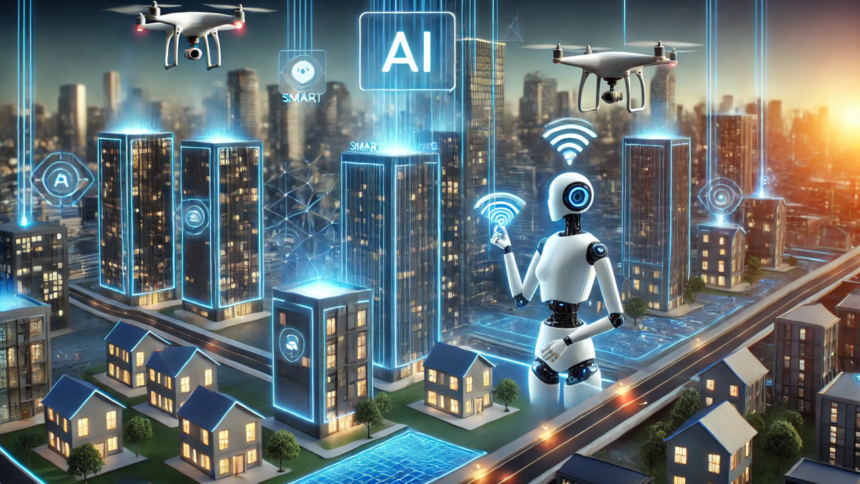
The real estate industry is experiencing a technological revolution that is fundamentally transforming how properties are discovered, evaluated, purchased, and managed. In 2025 and 2026, artificial intelligence and smart home technology have moved from experimental innovations to essential infrastructure powering the modern property market. For investors, homebuyers, real estate professionals, and property managers, understanding these trends is no longer optional but critical for success in an increasingly competitive and technology-driven marketplace.
- The Explosive Growth of AI in Real Estate
- Intelligent Property Search and Discovery
- Automated Valuation Models: Precision Pricing
- Predictive Analytics and Investment Forecasting
- Smart Building Technology and IoT Integration
- Smart Home Features Driving Property Values
- Virtual and Augmented Reality Property Tours
- AI-Powered Customer Service and Lead Management
- Blockchain Integration and Smart Contracts
- Video Marketing and AI-Generated Content
- Market Adoption and Industry Transformation
- Challenges and Considerations
- Future Outlook: What’s Next for AI and Smart Real Estate
- Conclusion: Embracing the AI-Powered Future
- Sources and References
This comprehensive guide explores the cutting-edge AI and smart real estate trends that are reshaping the industry, from intelligent property search platforms to IoT-enabled smart buildings, predictive analytics for investment decisions, and automated property management systems that are revolutionizing how we interact with real estate.
The Explosive Growth of AI in Real Estate
The numbers tell a compelling story about AI’s rapid adoption across the real estate sector. The global AI in real estate market, valued at $2.9 billion in 2024, is projected to surge to $41.5 billion by 2033, representing a compound annual growth rate exceeding 30 percent. This extraordinary expansion reflects the technology’s proven ability to deliver measurable returns on investment.
According to the 2024 Delta Media Real Estate Leadership Survey, three-quarters of the nation’s top brokerages now use AI in some form, and nearly 80 percent of their agents rely on it to work faster and more efficiently. The AI in Real Estate market is projected to grow from $222 billion in 2024 to over $300 billion in 2026 and nearly $990 billion by 2029, demonstrating the scale of transformation sweeping through the industry.
This widespread adoption is driven by tangible business outcomes. Firms adopting AI tools report up to 300 percent increases in lead volume and 40 percent higher conversion rates. AI could boost productivity by $110 billion to $180 billion, saving real estate professionals significant time in their marketing and sales activities. These aren’t incremental improvements but transformational changes in operational efficiency and business performance.
For individual consumers, AI democratizes access to sophisticated analytical tools that were previously available only to institutional investors and large real estate firms. Homebuyers can now research markets thoroughly, assess property values accurately, and make informed decisions with confidence, while investors can evaluate opportunities with institutional-grade analytics regardless of portfolio size.

Intelligent Property Search and Discovery
The traditional property search experience, characterized by endless scrolling through irrelevant listings and frustrating mismatches between buyer needs and search results, has been fundamentally reimagined through AI-powered recommendation engines.
Personalized Property Recommendations
Modern AI platforms analyze user behavior including budget, location preferences, home size requirements, and lifestyle needs to recommend properties that genuinely match buyer criteria. Instead of checking hundreds of listings manually, AI filters properties based on accurate matching results, saving time and dramatically improving the buying experience for busy clients.
AI studies user behavior such as budget, location, home size, and lifestyle needs. It recommends the right homes faster, helping buyers find properties without endless searching. The system tracks which listings users view, how long they examine each property, which features generate interest, and which characteristics lead to property tours or offers. Machine learning algorithms analyze these behavioral signals to understand preferences better than buyers might articulate themselves.
Natural Language Processing and Voice Search
Natural language processing enables conversational search interfaces where users can describe what they want in plain language rather than filling out rigid forms with checkboxes. Statements like “I need a quiet neighborhood with excellent schools, walking distance to parks, and a large backyard for my dogs” get processed by AI systems that understand the intent and translate it into relevant search parameters.
Voice-activated search through smart speakers and mobile devices makes property research even more accessible. Users can inquire about new listings, schedule tours, and get property information through spoken queries while cooking dinner, commuting, or relaxing at home, reducing friction in the property search process.
Visual Search Capabilities
Visual search technology allows users to upload photos of homes they like, and AI systems identify similar properties in the market based on architectural style, exterior appearance, interior design, and other visual characteristics. This image-based search complements text queries, providing another avenue for property discovery that’s particularly effective for buyers who know what they want when they see it but struggle to describe it in words.
Automated Valuation Models: Precision Pricing
Property valuation has traditionally relied on comparative market analysis performed by human appraisers, a process that is time-consuming, subjective, and prone to significant errors. Traditional appraisal methods contain substantial errors in over 33 percent of cases, creating problems for buyers, sellers, and lenders alike.
AI-Powered Valuation Accuracy
AI-powered automated valuation models now achieve median error rates as low as 2.8 percent, dramatically outperforming traditional appraisal methods that contain significant errors in over 33 percent of cases. These systems ingest enormous datasets including millions of historical transactions, property characteristics, tax assessments, neighborhood demographics, school ratings, crime statistics, proximity to amenities, transportation access, and economic indicators.
Machine learning algorithms identify complex relationships between these variables and property values, generating valuations that are both faster and more accurate than traditional methods. Leading platforms like HouseCanary, Homesage.ai, and Zillow’s Zestimate now provide instant valuations for virtually every property in their coverage areas.
Multi-Dimensional Data Analysis
AI processes historical sales, neighborhood trends, school ratings, crime statistics, walkability scores, and even social media sentiment to determine precise market value. Unlike quarterly comparative market analysis reports, AI valuations incorporate current market dynamics including inventory levels, days-on-market trends, and recent comparable sales, updating continuously as new data becomes available.
Homesage.ai’s Full Property Report combines computer vision and machine learning to deliver valuations that account for property condition, renovation costs, and investment potential, factors that traditional AVMs often miss. The Property Condition API uses advanced computer vision to assess and categorize property conditions as Excellent, Good, Average, Outdated, Poor, or Very Poor, providing clear, objective snapshots for buyers, sellers, and investors.
Visual Analysis and Computer Vision
Some advanced AVMs now integrate computer vision to assess property physical condition, upgrades, and curb appeal from photographs and video tours. These visual assessments complement traditional data points, providing a more comprehensive valuation picture. Computer vision systems can analyze images to detect renovation potential, identify properties where strategic improvements could generate outsized returns, and assess maintenance needs that impact value.
Predictive Analytics and Investment Forecasting
Perhaps the most powerful application of AI in real estate is predictive analytics, which enables investors to forecast future market conditions, property values, and investment returns with unprecedented accuracy.
Market Trend Prediction
Predictive analytics use historical patterns, economic indicators, demographic trends, employment statistics, infrastructure development plans, zoning changes, and local development data to forecast price trends, rental demand, and optimal transaction timing. Price appreciation forecasting identifies neighborhoods positioned for growth before prices surge, allowing clients to maximize ROI.
Short-term predictions covering 6 to 12 months achieve 82 to 91 percent accuracy for property values in stable markets with good data. Medium-term forecasts spanning 1 to 3 years reach 72 to 82 percent accuracy. These prediction capabilities empower investors to identify neighborhoods positioned for growth before prices surge, getting ahead of market trends to capture appreciation.
Risk Assessment and Portfolio Optimization
AI models evaluate default probability for specific properties based on borrower characteristics, loan terms, property attributes, and local economic conditions. This risk scoring helps lenders make better underwriting decisions and allows investors to price risk appropriately when making direct loans or purchasing mortgage-backed securities.
Portfolio optimization tools use AI to analyze holdings and recommend strategic adjustments. These systems consider factors like geographic concentration risk, property type diversification, correlation between holdings, individual property performance, and market outlook to suggest acquisitions or dispositions that would improve overall portfolio risk-adjusted returns.
Investment Opportunity Identification
AI rapidly analyzes millions of transactions to spot pricing anomalies or identify emerging neighborhoods before competitors catch on. This capability gives savvy investors a crucial first-mover advantage in rapidly appreciating markets. Platforms like PropStream employ various data sources and AI algorithms to generate propensity scores for properties, predicting the likelihood of default and identifying distressed asset opportunities.
Smart Building Technology and IoT Integration
The Internet of Things is transforming buildings from passive structures into intelligent, responsive environments that adapt to occupant needs while optimizing energy consumption and operational efficiency.
IoT-Enabled Building Management
Smart buildings use networks of IoT sensors distributed throughout properties to continuously monitor environmental conditions, equipment performance, energy consumption, and space utilization. These sensors feed data to AI systems that analyze patterns, detect anomalies, and make real-time operational decisions to optimize building performance.
Smart thermostats, leak detectors, and predictive maintenance sensors are making homes more efficient and secure. IoT devices can catch issues early, before they turn into expensive problems. For property managers and homeowners, this means fewer surprises, longer-lasting appliances, and better overall value. In multifamily and commercial spaces, IoT also means less downtime and smoother operations.
Predictive Maintenance Revolution
Traditional maintenance follows either reactive approaches (waiting until equipment fails) or scheduled approaches (performing service at fixed intervals regardless of actual equipment condition). Both methods are inefficient and costly.
AI-powered predictive maintenance monitors equipment in real time to detect early warning signs of potential failure. Sensors track vibration patterns in motors, temperature fluctuations in HVAC systems, unusual sounds in elevators, pressure variations in plumbing, and power consumption anomalies in electrical systems. Machine learning algorithms learn normal operating patterns and flag deviations that suggest developing problems.
By 2026, leading property management firms are using AI-IoT dashboards to cut energy waste by 25 percent and maintenance costs by 30 percent, setting new benchmarks for operational efficiency in real estate. These savings flow directly to property net operating income, increasing valuations and returns while improving tenant satisfaction and retention.
Energy Optimization Systems
AI continuously adjusts building operations for maximum efficiency. Smart thermostats like Nest learn household occupancy patterns and automatically adjust heating and cooling schedules, reducing energy use by 15 to 20 percent. They integrate weather forecasts, daily routines, and local utility pricing to optimize efficiency without requiring manual input.
Lighting systems dim or turn off in unoccupied areas while ensuring well-lit conditions where people are working. These adjustments happen dynamically throughout the day based on real-time occupancy detection and learned patterns. The result is buildings that consume significantly less energy while maintaining or improving occupant comfort.

Smart Home Features Driving Property Values
Smart home technology has evolved from luxury amenity to expected standard, particularly among millennial and Gen Z homebuyers who have grown up with connected technology and expect their homes to offer similar convenience.
Voice-Activated Home Control
Voice-activated interfaces have become a centerpiece in smart home ecosystems, providing seamless control without physical interaction. Devices like Amazon Echo and Google Nest enable users to manage lighting, security, climate, and entertainment through simple voice commands. The global voice assistant market is projected to reach $27.16 billion by 2026, reflecting widespread adoption.
Beyond convenience, voice systems improve accessibility, allowing users with disabilities or limited mobility to maintain independence. Advances in natural language processing allow these systems to understand context better and personalize responses, making interactions more intuitive and reducing friction in daily smart home usage.
Integrated Security Systems
AI-powered security systems provide more effective monitoring with fewer false alarms. Computer vision analyzes video feeds to distinguish between actual security threats and benign events that trigger traditional motion sensors. Facial recognition controls access to restricted areas while tracking unauthorized entry attempts. Pattern recognition identifies suspicious behavior that human monitors might miss during long surveillance shifts.
Smart doorbells with integrated cameras allow homeowners to see and communicate with visitors remotely, even when away from home. Integration with smart locks enables remote access control, allowing homeowners to grant temporary access to service providers, guests, or delivery personnel without physical key exchange.
Climate and Environmental Control
AI thermostats learn occupancy patterns and automatically adjust temperature settings to maintain comfort while minimizing energy consumption. They consider factors including outdoor temperature, weather forecasts, time of day, and historical usage patterns to optimize heating and cooling operations.
Air quality sensors monitor indoor environmental health, detecting volatile organic compounds, carbon dioxide levels, and particulate matter. The system can automatically adjust ventilation, trigger air purifiers, or alert occupants when indoor air quality deteriorates, promoting healthier living environments.
Matter Protocol and Interoperability
The Matter protocol will standardize connectivity across brands by 2026, enabling seamless interoperability between smart devices from different manufacturers. This addresses one of the persistent frustrations in smart home adoption where devices from different brands often cannot communicate effectively, forcing consumers to choose a single ecosystem or manage multiple incompatible systems.
With Matter adoption, smart home devices will become increasingly compatible, leading to increased functionality and better user experiences. Homeowners will be able to mix and match devices from different manufacturers based on features and value rather than being locked into a single brand’s ecosystem.
Virtual and Augmented Reality Property Tours
The way properties are showcased has undergone a complete transformation through immersive technologies that allow potential buyers to explore properties remotely with unprecedented detail.
3D Virtual Tours
Virtual tour platforms like Matterport use specialized cameras and LiDAR sensors to capture precise 3D models of properties. AI algorithms process the raw capture data to create detailed digital twins that users can navigate freely, examining every room, closet, and outdoor space from any angle. The level of detail allows users to measure dimensions, assess ceiling heights, and evaluate sight lines with accuracy impossible in traditional photographs.
Computer vision AI enhances these tours with automatic object recognition and tagging. The system identifies and labels appliances, fixtures, architectural features, and materials, providing information overlays that appear when users explore the space. Buyers can click on a kitchen countertop to learn it’s granite, select a light fixture to see the brand and model, or examine flooring to understand its composition.
AI-Powered Virtual Staging
Virtual staging powered by AI has become a cost-effective alternative to physical staging. Systems can furnish empty rooms digitally, showing buyers how spaces could look with furniture and decor. Unlike static staged photos, AI staging can generate multiple design options, allowing viewers to see contemporary, traditional, modern, or any other style applied to the same space.
Some platforms even personalize staging based on user preferences detected through their browsing behavior, showing furniture and decor styles that align with the viewer’s demonstrated tastes. This personalization increases emotional connection with properties and helps buyers visualize themselves in the space.
Augmented Reality Applications
Augmented reality extends virtual tours into the physical world. Buyers visiting properties can use smartphone or tablet cameras to overlay information onto what they see. Point the device at a wall, and AR displays what the room would look like with a different paint color. Aim it at an empty corner, and AR shows how a specific piece of furniture would fit.
This technology bridges the gap between imagination and reality, helping buyers visualize possibilities and make more confident decisions. For properties requiring renovation, AR can show potential transformations, helping buyers see past current conditions to envision a property’s potential.
AI-Powered Customer Service and Lead Management
Real estate has traditionally been labor-intensive, with agents juggling multiple clients and transactions. AI-powered customer service tools are transforming this dynamic by automating routine tasks and enabling more efficient lead management.
Intelligent Chatbots
AI-powered chatbots provide instant, 24/7 engagement with prospective clients. These systems handle routine inquiries about property details, neighborhood information, showing availability, and financing options without human intervention. Natural language processing allows chatbots to understand questions posed in conversational language and provide relevant, helpful responses.
Modern real estate chatbots actively qualify leads by gathering information about budget, location preferences, must-have features, timeline, and financing status. This qualification process helps agents prioritize their time on the most serious and suitable prospects. The chatbot can schedule property showings directly into agent calendars, send property information and virtual tour links, and maintain engagement through automated follow-up messages.
Real estate teams using AI chatbots have reported up to 40 percent increases in lead conversion rates. Portugal’s Porta da Frente Christie’s closed $100 million in sales in early 2025 using AI assistants that handle lead qualification and property matching around the clock, allowing human agents to focus exclusively on negotiations and relationship-building.
Lead Scoring and Prioritization
Lead scoring algorithms analyze prospect behavior across multiple touchpoints to assess purchase likelihood and timeline. The system tracks website visits, email opens, property tour views, inquiry frequency, search behavior, and engagement patterns to score leads on likelihood to convert.
High-scoring leads get prioritized for agent follow-up with personalized outreach, while lower-scoring leads receive automated nurture campaigns until their engagement signals indicate readiness for personal consultation. This intelligent routing ensures agents focus their limited time on prospects most likely to transact, improving efficiency and conversion rates.
Sentiment Analysis
Sentiment analysis tools monitor customer communications to detect satisfaction issues before they escalate. These systems analyze email, chat, and call transcripts to identify negative sentiment, frustration, or dissatisfaction. Alerts notify managers when intervention might prevent a tenant from leaving or a client from switching agents, enabling proactive relationship management.
Blockchain Integration and Smart Contracts
While blockchain operates independently of AI, the integration of these technologies creates powerful synergies for real estate transactions, improving transparency, security, and efficiency.
Transparent Transaction Recording
Blockchain provides a decentralized, immutable ledger for recording property ownership, transaction history, and associated documentation. Traditional title systems rely on centralized county records that may contain errors, gaps, or fraudulent entries. Blockchain-based title recording creates a transparent, verifiable chain of ownership that is extremely difficult to alter fraudulently.
Each transaction is cryptographically signed and linked to previous transactions, creating an auditable trail from the current owner back to the original property grant. Companies like Propy have pioneered blockchain-enabled real estate transactions, facilitating property sales where the entire process from offer to deed recording occurs on-chain.
Automated Smart Contracts
Smart contracts are self-executing agreements with terms directly written into code. When specified milestones are reached, such as inspection approval or loan funding, smart contracts automatically trigger the next transaction step without requiring manual intervention. This automation accelerates closing timelines while reducing the coordination burden on transaction parties.
AI integration enhances smart contracts through intelligent analysis and automation. AI algorithms verify document authenticity before blockchain recording, detect potentially fraudulent transactions before they are committed to the ledger, and provide valuation services for tokenized properties.
Property Tokenization
Property tokenization divides ownership into digital tokens that can be bought and sold like shares of stock. This enables fractional ownership, allowing investors to purchase portions of properties rather than acquiring entire buildings. Tokenization democratizes access to real estate investment, particularly for high-value commercial properties that would otherwise require millions in capital.
Tokenization also improves liquidity in real estate, traditionally an illiquid asset class. Token holders can sell their shares on secondary markets without waiting for the entire property to sell. This liquidity is particularly attractive for investors who want real estate exposure but need the ability to exit positions more quickly than traditional real estate allows.

Video Marketing and AI-Generated Content
Video has emerged as the dominant content format in real estate marketing, with properties showcased through video receiving 403 percent more inquiries than those without. AI is making video creation more accessible and effective for real estate professionals.
AI Video Creation Tools
Agents no longer need expensive film crews or sophisticated editing software to produce quality real estate videos. AI real estate video tools allow agents to create videos directly from listing photos. In just a few minutes, the system generates a smooth, ready-to-share video with transitions, music, and text overlays.
AI video creation gives agents more control, turning video production into something they can manage on their own schedule while still delivering the polished results buyers and sellers expect. Some platforms can even generate AI avatars that present properties, allowing agents to create professional videos without appearing on camera themselves.
Automated Video Enhancement
AI isn’t only about creating videos from photos but also transforming how agents edit, repurpose, and share content. Modern tools can clean up shaky clips, adjust lighting, add captions automatically, and optimize videos for different platforms. These capabilities make professional real estate video marketing more accessible to everyone regardless of technical skills.
AI-assisted editing can generate multiple versions of a single property tour optimized for different platforms (Instagram, TikTok, YouTube) with appropriate aspect ratios, lengths, and styles. This automation dramatically reduces the time required to maintain a multi-platform video marketing presence.
Drone Videography Integration
Homes with aerial footage are reported to sell up to 68 percent faster, according to data from the National Association of Realtors. Drone videography helps buyers understand property layouts, lot sizes, neighborhood context, and surrounding amenities in ways that ground-level photography cannot convey.
What was once a luxury reserved for high-end listings has become an expected standard, especially for single-family homes, properties with large lots, or scenic surroundings. AI-powered flight planning and image stabilization make drone operation safer and more efficient, while automated editing combines aerial and ground-level footage into cohesive property presentations.
Market Adoption and Industry Transformation
The real estate industry’s adoption of AI and smart technology has reached a tipping point where these tools are transitioning from competitive advantages to baseline requirements for market participation.
Widespread Professional Adoption
Nearly 97 percent of real estate professionals now show active interest in artificial intelligence, reflecting the industry’s recognition that AI is not optional but essential for competitive practice. However, adoption rates vary significantly. While 75 percent of top brokerages use AI in some form, 46 percent of individual agents do not, and 17 percent don’t plan to use it in the next few years.
This gap creates a significant divide between agents leveraging AI for efficiency and those relying on traditional methods. As AI-powered agents handle more transactions faster with better client experiences, those without AI capabilities will find themselves at increasing disadvantage. Industry experts suggest that the work done in the next 90 to 120 days will impact the next 10 years of careers, emphasizing the urgency of AI adoption.
Consumer Expectations
Consumer expectations have shifted dramatically. Buyers and sellers now expect instant responses to inquiries, personalized property recommendations, accurate valuations, immersive virtual tours, and data-driven insights about market trends and investment potential. Real estate professionals who cannot deliver these AI-powered services risk losing clients to competitors who can.
The smart home market is projected to generate over $170 billion in revenue in 2025, with household penetration expected to reach 77.6 percent in 2025 and 92.5 percent by 2029. These statistics demonstrate that smart homes are rapidly becoming the norm rather than the exception in residential real estate.
Investment in PropTech
Investment in property technology continues accelerating. By 2023, PropTech investment reached approximately $630 billion, showing serious commitment to integrating AI into real estate operations. By 2025 and beyond, expect investment to increase even further as investors, developers, and other stakeholders ramp up technology spending.
Over 80 percent of investors plan to increase their technology investment in the coming years, creating vast opportunities for AI innovation in real estate. The PropTech ecosystem provides infrastructure for AI to transform real estate operations comprehensively.
Challenges and Considerations
Despite tremendous benefits, AI and smart technology adoption in real estate faces significant challenges that must be addressed for sustainable implementation.
Data Privacy and Security
AI systems require massive volumes of buyer, seller, and property data to function effectively. Without robust data governance, encryption, and security measures, sensitive information becomes vulnerable to breaches or misuse. Ensuring compliance with data protection regulations like GDPR, CCPA, and emerging AI-specific governance frameworks is now a non-negotiable priority for real estate firms.
Smart homes rely on network connections between devices, presenting significant security risks. Studies have found that approximately 70 percent of IoT devices have security vulnerabilities that could allow unauthorized access. As homes become more connected, cybersecurity becomes increasingly critical for protecting both property systems and personal data.
Algorithmic Bias
AI systems learn from historical data, and if that data reflects past discriminatory practices, algorithms may perpetuate or even amplify those biases. Studies have documented that Automated Valuation Models tend to undervalue homes in predominantly minority neighborhoods, not because algorithms are explicitly programmed with bias, but because they learn patterns from historical appraisals that reflected human bias.
Addressing algorithmic bias requires regular audits of AI systems for discriminatory outcomes, diverse training datasets representing all population segments, bias detection tools that flag suspicious patterns, and human oversight for decisions with significant equity implications. Transparency in AI decision-making processes helps stakeholders understand how systems reach conclusions and identify potential bias issues.
Technology Integration Complexity
Integrating AI and smart home systems across different brands and platforms has historically been challenging due to proprietary standards and incompatible communication protocols. While standards like Matter promise to address interoperability issues, the transition period involves complexity as properties contain a mix of older incompatible devices and newer standardized systems.
Real estate professionals must develop technical literacy to guide clients through smart home systems, troubleshoot basic issues, and understand the value propositions of different technologies. This learning curve can be steep for professionals accustomed to traditional real estate practices.
Digital Divide Concerns
Small brokerages and individual agents may struggle to afford sophisticated AI platforms that large firms deploy. This technology gap could accelerate industry consolidation as firms with better tools capture market share. Ensuring broad access to AI capabilities, perhaps through shared platforms or affordable subscription services, helps maintain competitive diversity in real estate markets.
Similarly, not all consumers have equal access to smart home technology or the digital literacy to use it effectively. This digital divide creates equity concerns as smart features increasingly influence property values and rental pricing.
Future Outlook: What’s Next for AI and Smart Real Estate
Looking beyond 2025-26, several emerging trends will further transform real estate technology and practice.
Autonomous Building Management
Future AI systems will evolve into autonomous, self-learning platforms that optimize property maintenance, tenant management, and energy efficiency without manual oversight. These systems will continuously learn from data to make real-time operational decisions, improving performance over time while reducing the need for human intervention in routine operations.
Climate Risk Integration
Climate risk assessment will become deeply integrated into AI valuation models. As environmental concerns grow, systems will incorporate flooding probabilities, wildfire risks, sea level rise projections, extreme weather patterns, and long-term climate trends into property valuations and investment recommendations. This integration helps investors and homeowners make informed decisions about long-term property viability.
Health-Focused Smart Homes
Smart home technology will increasingly focus on occupant health and wellness. Air quality sensors will monitor and automatically improve indoor environments. Robot companions will assist with daily routines and provide elderly care. Augmented reality mirrors will provide exercise and posture guidance through AI feedback, extending smart home functionality beyond convenience to holistic wellness and lifestyle optimization.
Advanced AI Agents
Agentic AI, which can plan and act with minimal prompting and run continuous processes with limited supervision, represents the next evolution. These systems will move beyond responding to queries to proactively managing entire transaction workflows, portfolio strategies, and property operations based on high-level objectives set by humans.
Quantum Computing Applications
While still largely experimental, quantum computing could dramatically enhance AI prediction capabilities. The massive computational power of quantum systems could enable models that consider thousands of variables simultaneously, achieving accuracy levels impossible with classical computing. This could push property value forecast accuracy above 90 percent for 18 to 24 month periods.
Conclusion: Embracing the AI-Powered Future
AI and smart technology have fundamentally transformed real estate in 2025-26, touching every aspect from property search and valuation to transactions, management, and investment strategy. The technology delivers unprecedented efficiency, accuracy, and insight, enabling faster decisions backed by comprehensive data analysis.
For real estate professionals, the imperative is clear: embrace AI as a tool that enhances capabilities rather than a threat to livelihoods. Agents who learn to leverage AI for property search, valuation, and customer engagement will serve clients more effectively while managing larger client rosters. Property managers using smart building technology will operate more efficiently and profitably. Investors applying predictive analytics will make better decisions and generate superior returns.
For consumers, AI democratizes access to sophisticated analysis tools and market insights previously available only to industry insiders. Homebuyers can research markets thoroughly, assess property values accurately, and make informed decisions with confidence. Investors can evaluate opportunities with institutional-grade analytics regardless of portfolio size. Tenants benefit from better-managed buildings with proactive maintenance and optimized operations.
The winners in this new landscape are those who have successfully integrated AI and smart technology into their operations while maintaining the human touch that remains essential in real estate. Technology handles repetitive tasks, data analysis, and initial client interactions, freeing professionals to focus on relationship building, strategic advice, and complex negotiations where human judgment remains irreplaceable.
As we move deeper into 2025 and toward 2026, AI will become even more deeply embedded in real estate infrastructure. The technology will feel less like a distinct tool and more like an invisible foundation supporting every transaction, valuation, search, and management decision. Success will belong to those who adapt skillfully to this AI-augmented reality while preserving the human elements that make real estate fundamentally a people business.
The transformation is irreversible and accelerating. Artificial intelligence and smart home technology have become essential infrastructure for modern real estate success. Whether you’re a first-time homebuyer, seasoned investor, real estate professional, or property manager, understanding and leveraging these capabilities will increasingly determine your outcomes in this dynamic, technology-driven market. The future of real estate is smart, connected, and powered by AI. Those who embrace this future will thrive, while those who resist will find themselves struggling to compete in an industry that has fundamentally evolved.
Sources and References
- Homesage.ai – 3 Main Ways AI Is Changing Real Estate Data in 2026
- Medium – The Complete Guide to AI in Real Estate in 2026
- Inman – 5 Hot Real Estate Technology Trends
- PwC – How AI Adoption is Transforming Real Estate Operations
- NGD Technolab – AI for Real Estate in 2026 Strategy Guide
- The Business Research Company – AI In Real Estate Market Report 2025
- FlippingBook – Digital Technologies That Shape Real Estate in 2026
- CNBC – AI Tech Talent is Juicing These Real Estate Markets
- GraffersID – AI in Real Estate 2026
- Artoon Solutions – AI Innovation Transforming Corporate Real Estate in 2026
- IoT Breakthrough Awards – The Smart Home in 2026: What’s Actually Sticking
- Tech Times – Future Tech: Smart Home Ecosystem and IoT Trends
- Imaginovation – IoT in Real Estate: Use Cases and 2025 Trends
- Rentastic – The Rise of Smart Homes: Technology Trends in 2025 Real Estate
- Realty Executives – The Rise of Smart Home Technology
- Appinventiv – The Future of Smart Homes with IoT in Real Estate
- Times Union – AI in Real Estate 2025: Tools, Trends and Human Connection
- Real Estate News – The Ten: Real Estate Faces an AI Tipping Point
- RTS Labs – AI in Real Estate: Use Cases, Benefits, and Future Trends
- Full Circle Real Estate – How Artificial Intelligence Is Transforming Real Estate in 2025