


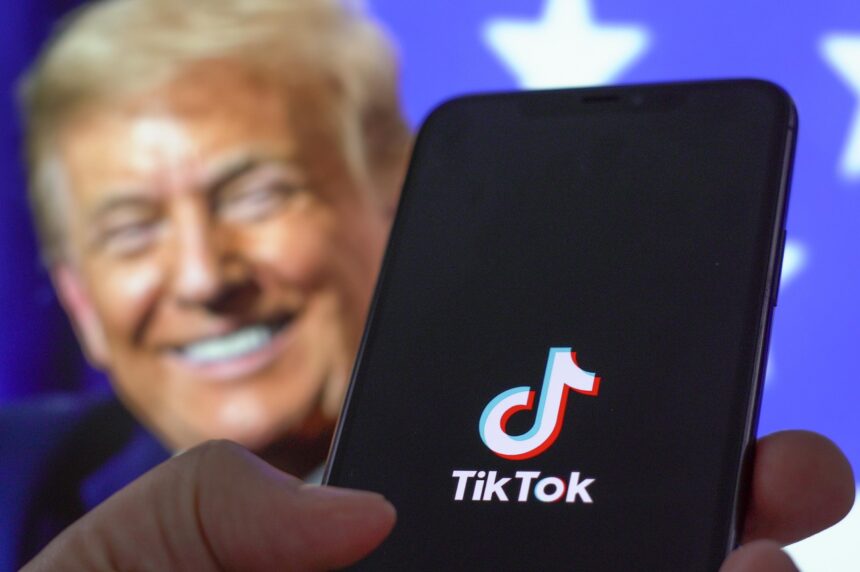
The Great Tech Pivot: ByteDance’s Stealth Launch of AI Empire Amid Regulatory Calm
The Art of the Regulatory Sidestep: How ByteDance Is Re-Architecting Its Global Strategy
The global saga surrounding TikTok and its Chinese parent company, ByteDance, has been one of the most compelling narratives in modern technology and geopolitics. With the specter of a definitive US ban constantly looming—only to be repeatedly postponed, negotiated, and put on hold by executive orders and court challenges—the world’s most valuable private technology company has not succumbed to paralysis. Instead, ByteDance is executing a sophisticated, long-term pivot. By quietly launching a new fleet of advanced Artificial Intelligence applications, ByteDance is not only diversifying its revenue streams but is strategically repositioning itself as a global leader in foundational AI, moving its core identity beyond the often-controversial sphere of social media.
- The Art of the Regulatory Sidestep: How ByteDance Is Re-Architecting Its Global Strategy
- Live Market Analysis: The AI Applications ByteDance is Deploying (December 2025)
- The Geopolitical Chess Match: Navigating US Export Controls and Investment
- The Tectonic Shift: From Attention Economy to Agency Economy
- The Legal & Corporate Governance Implications
This strategic pivot is a masterclass in risk mitigation and technological foresight. Faced with an uncertain US market for its flagship short-video platform, the company is leveraging the very engine of TikTok’s success—its world-class, deep-learning recommendation algorithms—to power new products in less politically contentious, yet incredibly high-value, domains. The current regulatory pause, created by a complex deal and continuous deadline extensions, has provided a critical, albeit temporary, window for ByteDance to solidify its position in the rapidly expanding Generative AI landscape, cementing its transition from a social media titan to a full-stack AI infrastructure powerhouse.
Live Market Analysis: The AI Applications ByteDance is Deploying (December 2025)
The launches happening across the ByteDance ecosystem are not minor feature updates; they represent the deployment of next-generation, high-performance AI designed to compete directly with offerings from Google, Microsoft, and OpenAI. The company is actively focusing on two critical, high-value areas: AI Mobile Integration and Content Creation & Infrastructure.
1. The AI Mobile Revolution: Doubao and the ‘AI Phone’ Prototype
The most significant recent development is the aggressive push into the on-device AI market, aiming to integrate its proprietary Large Language Models (LLMs) directly into the smartphone operating system.
- Doubao (The Chinese Powerhouse): This is ByteDance’s flagship consumer AI chatbot, a strong competitor to products like OpenAI’s ChatGPT. Latest data shows Doubao dominating the Chinese consumer AI market, boasting significantly higher Monthly Active Users (MAUs) than its domestic rivals like Tencent’s Yuanbao.
- The AI Phone Concept: In partnership with hardware makers like ZTE (under the Nubia brand), ByteDance has launched an engineering prototype of an “AI Phone” powered by the Doubao LLM. This is not a standard voice assistant like Siri or Alexa; it’s an agentic AI system. The device allows users to perform complex, multi-app tasks—such as ordering takeout, booking tickets, or comparing prices across e-commerce platforms—using only voice commands, without touching the display. This is a leap toward truly touchless, intent-driven mobile computing.
- Cici (The Global Counterpart): ByteDance is reportedly developing Cici as the international version of Doubao, positioning it to compete in the highly valuable global AI assistant market, provided it can navigate the data security and localization challenges inherent in cross-border LLM deployment.
2. Infrastructure & Content Creation: Building the Creator Economy 2.0
ByteDance is capitalizing on its deep expertise in video and content creation by launching AI tools that target professionals and creators globally, areas where the geopolitical risk is generally lower than direct consumer social media.
- Dreamina (Text-to-Video Generator): Recognizing the massive demand for generative media, ByteDance is developing Dreamina, a sophisticated text-to-video platform. This technology allows creators to generate entire video clips from simple text prompts, leveraging the company’s vast experience with short-form video synthesis and deep learning models. This directly challenges platforms like OpenAI’s Sora and Runway, demonstrating a high-stakes play in the creative AI sector.
- OmniHuman-1 (Realistic Video Synthesis): On the research side, the company has showcased OmniHuman-1, an AI system capable of creating ultra-realistic videos from a single static image combined with motion or audio signals. While not yet publicly available, this technology highlights ByteDance’s commitment to pushing the boundaries of digital human and virtual avatar creation, a crucial component for the future of entertainment, marketing, and the metaverse.
- CapCut’s AI Expansion: The already popular video editing app, CapCut, continues to be one of ByteDance’s most successful global apps outside of TikTok. The company is rapidly integrating new, state-of-the-art AI features into CapCut, making it easier for users to edit, augment, and even generate video components, further cementing its role as an infrastructure layer for the creator economy. CapCut’s operational separation and focus on utility make it a valuable low-risk asset in the face of regulatory headwinds.
These deployments underscore a critical strategy: use the regulatory calm to launch products that rely purely on technological superiority and utility, aiming for market entrenchment before the political winds shift again. (Source: The Hindu, December 2, 2025; Lokshahi, December 8, 2025; vidBoard.ai, October 23, 2025)

The Geopolitical Chess Match: Navigating US Export Controls and Investment
The pivot to AI is not merely a commercial decision; it is a geopolitical defense mechanism. For a Chinese-owned company to maintain technological parity—or superiority—in the global market, it must overcome increasingly stringent US-led export controls on foundational AI hardware.
The Chip Access Conundrum
Advanced Generative AI models, such as the ones powering Doubao and Dreamina, require massive computing power, specifically high-performance Graphics Processing Units (GPUs) manufactured by companies like Nvidia. US policy has severely restricted the export of the most advanced chips (like the H100 and newer models) to Chinese entities, forcing companies like ByteDance into complex, multi-layered strategies.
- The Overseas Procurement Strategy: ByteDance has signaled plans to invest billions—potentially over $20 billion globally—in AI infrastructure in 2025. A significant portion of this capital is reportedly earmarked for acquiring access to cutting-edge Nvidia chips through overseas data center facilities in regions like Southeast Asia. This strategy aims to circumvent US restrictions by utilizing computing power housed in politically neutral or US-allied jurisdictions, ensuring they can train their next-generation LLMs.
- The H200 Pursuit: Following a recent, temporary relaxation of certain US export controls by the administration, ByteDance and other Chinese giants have immediately inquired about purchasing the highly coveted Nvidia H200 AI chips. This illustrates the company’s singular focus: secure the absolute best hardware, regardless of the cost or complexity of the negotiation, to maintain its AI modeling competitive edge.
- Domestic Self-Reliance: Simultaneously, ByteDance is heavily investing in developing its own in-house AI chip alternatives and supporting the domestic Chinese semiconductor ecosystem. While Chinese-made chips may not yet match the power of the most advanced US GPUs for training colossal models, they are rapidly becoming suitable for inference—the process of running the models in real-time for users—which powers the efficiency of apps like Doubao.
This expensive, two-pronged approach—global access for training, domestic resources for inference—is essential for ByteDance to continue its AI development without becoming technologically dependent on the volatile US-China regulatory relationship.
The Tectonic Shift: From Attention Economy to Agency Economy
The transition from TikTok to a suite of AI apps represents a fundamental shift in ByteDance’s business model and the digital economy as a whole.
Phase 1: The Attention Economy (TikTok/Douyin)
- Core Product: Short-form video.
- Value Creation: Capturing and maximizing user attention through a flawless recommendation algorithm (the “For You Page”).
- Monetization: Advertising and e-commerce (TikTok Shop).
- User Interaction: Passive consumption and light creation.
Phase 2: The Agency Economy (Doubao, Dreamina, Cici)
- Core Product: Large Language Models and Generative AI.
- Value Creation: Empowering users and businesses with agency—the ability to execute complex tasks (AI Phone) and create professional content (Dreamina) with minimal effort.
- Monetization: Enterprise SaaS licensing, API access for developers, premium feature subscriptions, and high-margin, AI-enabled e-commerce transactions.
- User Interaction: Active command, creation, and workflow automation.
The move to the Agency Economy is strategically superior because it taps into higher-value revenue streams. Selling an enterprise AI solution or licensing an LLM’s API to a bank is a more stable, higher-margin transaction than relying purely on volatile digital advertising revenue. Furthermore, these utility applications are inherently less likely to trigger the national security panic that plagues social media platforms due to their direct connection to data sovereignty and influence campaigns.
The Legal & Corporate Governance Implications
The holding pattern on the TikTok ban—which has seen the US administration sign an executive order to suspend the ban and seek a buyer, a process complicated by China’s own export control laws regarding the core algorithm—creates a paradoxical environment.
The Divestiture Dilemma
The original US law required ByteDance to divest TikTok’s US operations or face a ban.
- US Demand: Separation of US user data and the recommendation algorithm from Chinese control.
- Chinese Response: Beijing’s export control laws effectively classify the core recommendation algorithm as a strategic national technology that cannot be freely sold to foreign entities.
This stalemate makes a clean sale incredibly difficult, forcing both sides into continuous negotiations and extensions. ByteDance’s launch of AI apps serves as a powerful message: its core technological value transcends the single TikTok application. If the US were to ban TikTok entirely, ByteDance would lose a massive revenue stream, but its Generative AI LLM stack—the technology that powers its new apps—would remain intact and ready for global deployment outside of the US. This greatly strengthens ByteDance’s bargaining position, demonstrating that a ban would harm US users and competition more than it would cripple the parent company’s long-term AI future.
Corporate Restructuring for Compliance
To mitigate future regulatory risks, ByteDance is likely enacting massive internal restructuring, creating clearer legal and technical walls between its global AI products (Cici, Dreamina) and its Chinese-centric LLM (Doubao) and its video platforms. This concept of “modular sovereignty” is crucial: building products that can be legally and technically severed or isolated by jurisdiction, allowing the company to thrive in less hostile markets even if one major market (the US) becomes permanently inaccessible.